




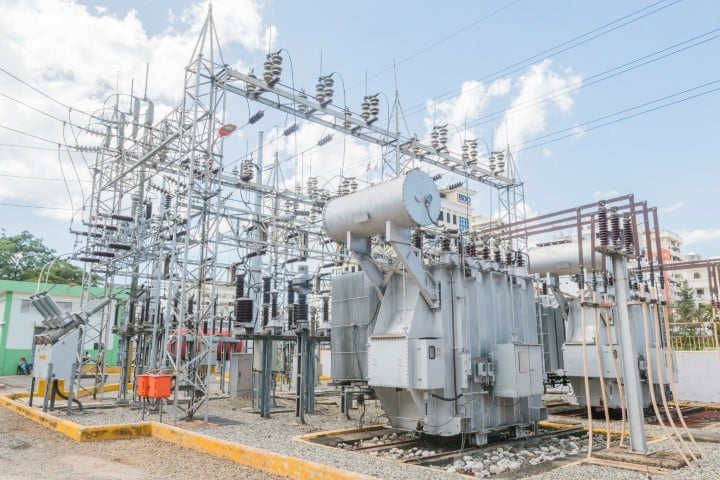
Infrastructure groups Balfour Beatty (LON:BBY) and Hill & Smith (LON:HILS) both raised their FY guidance after reporting strong H1 trading. Balfour Beatty said it had started H2 ‘with real momentum’.
Balfour Beatty H1 profit rises 40%
For the six months to June, Balfour Beatty posted revenue of £5.56 billion boosted by rising demand in US Buildings and UK Power Transmission. Underlying operating profit from earnings-based businesses jumped more than 40% to £153 million.
US Construction contributed £22 million of operating profit against an £11 million loss last year. The firm said it had seen strong growth in Buildings and reduced losses in Civil construction.
Support Services contributed £66 million of operating profit against £46 million last year driven by UK power transmission work. Underlying group earnings per share rose 50% to 21.7p, while the company raised the interim dividend by 12% to 4.7p.
Hill & Smith sees robust US demand
For the first half to June, Hill & Smith reported revenue of $607 million, up 5% on a like-for-like basis. The firm cited robust demand for US Infrastructure Solutions, which was partially offset by weaker trading in UK Engineered Solutions.
Revenue from higher-growth priority end markets represented 39% of group turnover, up from 34% in H1 2025. This reflected growth in power transmission and distribution, together with data-centre related demand.
Recent acquisitions contributed to growth, while the firm said it had an ‘active and growing’ pipeline of futher M&A opportunities. Operating profit increased 3% on a like-for-like basis to $103 million, while EPS increased 9% to 90.6 cents.
Both firms raise guidance
Balfour Beatty CEO Philip Hoare told investors he was ‘increasingly positive’ on the outlook thanks to new contract wins. The firm now sees FY26 earnings-based operating profit rising by low double digits instead of high single digits.
Hill & Smith CEO Rutger Helbing cited strength in the US and contributions from recent acquisitions for the increase in guidance. The company now sees underlying operating profit ‘modestly ahead’ of its previous target of around $212 million.

Balfour Beatty has long been a favourite of ours due to its market-leading position in the UK and increasingly the US. It has strong relationships with the government and the private sector and is involved in high-growth sectors.
In the UK, the firm has a 25% market share in transmission work, and its active order book has grown to £2.1 billion. Beyond that is a pipeline of £6 billion to £8 billion where the firm has won work but the projects have yet to commence.
In the US, it is active in the aviation sector, where construction spending is estimated to reach $140 billion between 2026 and 2029. It’s also active in data centres, where spending is expected to reach $250 billion between 2026 and 2029.
Hill & Smith is a smaller, more specialised business, but it too is benefitting from the expansion of US infrastructure spending. Around two thirds of group revenue and more than 80% of operating profit now come from the US, up sharply from H1 2025.
Like Balfour Beatty, it is exposed to power transmission and distribution as well as data centres. These markets have strong long-term structural drivers which should ensure continued profitable growth.
Of the two, Balfour Beatty is the cheaper both in terms of spot PE and cyclically-adjusted PE, which is understandable. Hill & Smith grows its profits much faster, and with a lot less volatility. However, at 23 times FY26 earnings it’s beginning to look overvalued to us, which may explain the muted response today.