



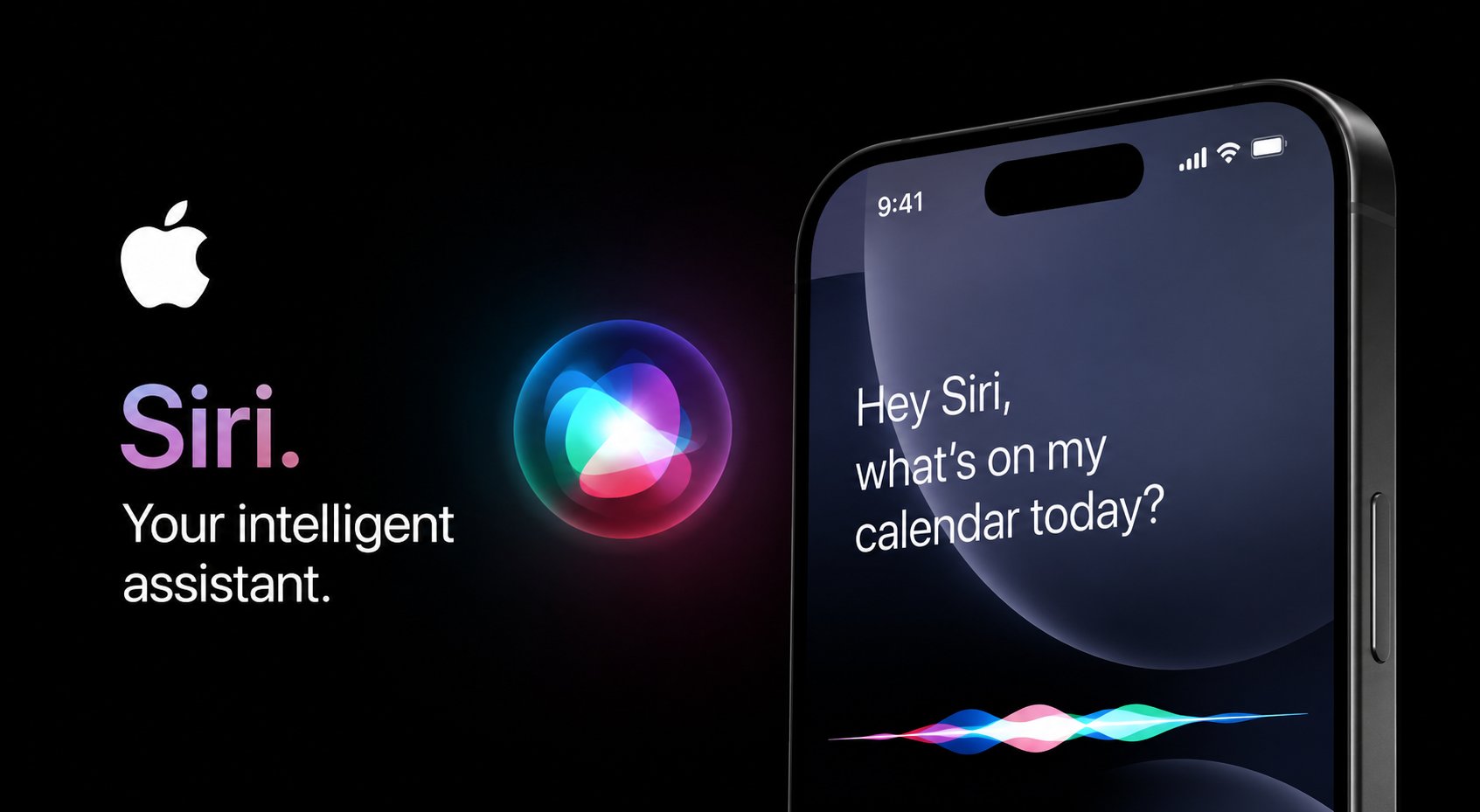
Shares in Apple (NASDAQ:AAPL) fell sharply on Tuesday (9 June) after investors gave a lukewarm reception to the company’s much-anticipated WWDC 2026 keynote address (World Wide Developers Conference). Despite unveiling a major overhaul of Siri and expanding its Apple Intelligence strategy, the announcements failed to meet the exceptionally high expectations already embedded in the share price.
Apple stock fell close on 4% on Tuesday and Wednesday pre-market data shows no sign of that reversing. In the week of trading sessions since 2 June, Apple shares have lost almost 8%. That’s almost $37 billion of market cap wiped out, or put another way, it’s like losing Next (LON:NXT) and Marks & Spencer (LON:MKS) combined.
| Apple (NASDAQ:AAPL) | Price: $290.55 (-3.6%) | Market cap: $4.27tn |
The reaction highlights a familiar market dynamic: when a stock has rallied strongly ahead of a major event, even good news can trigger profit-taking if investors were hoping for something more transformative.
Put into context, between 30 March and 2 June, Apple stock rallied 27.5%.
SpaceX IPO frenzy: should UK investors join the rush?
What investors were hoping for
Going into WWDC, Apple shares were trading near all-time highs after a powerful AI-driven rally. Investors were looking for several key developments:
| Investor Expectation | Why It Mattered |
| Fully operational AI-powered Siri | Potential catalyst for an iPhone upgrade cycle |
| Clear launch timeline | Reduce concerns after previous delays |
| New AI monetisation strategy | Support Services revenue growth |
| Proprietary AI leadership | Demonstrate Apple could compete directly with OpenAI and Google |
| Major AI hardware roadmap | Justify premium valuation multiples |
Analysts had repeatedly highlighted AI as Apple’s next major growth engine, with many viewing WWDC as a crucial catalyst for the stock.
What Apple actually announced
Apple unveiled:
- A rebuilt ‘Siri AI’ integrated into Apple Intelligence
- Deeper integration across iOS 27, iPadOS and macOS
- Expanded AI-powered productivity features
- New child-safety tools and ecosystem enhancements
- Continued partnership with Google’s Gemini AI model for certain capabilities
On paper, these are substantial upgrades. However, investors focused on what was missing.
Why investors were disappointed
1. No immediate AI revenue story
The biggest criticism was the absence of a clear path to monetising Apple’s AI investments.
Unlike rivals generating revenue from AI subscriptions, enterprise products or cloud services, Apple did not explain how its AI efforts will materially boost earnings in the near term.
2. Siri still appears delayed
While Siri AI was the headline announcement, investors wanted a definitive rollout schedule.
Instead, broad deployment appears likely to stretch into 2027, extending concerns that Apple remains behind rivals in generative AI.
3. Reliance on Google
Many investors hoped Apple would showcase a fully proprietary AI ecosystem.
Instead, the company highlighted further use of Google’s Gemini technology, reinforcing perceptions that Apple remains dependent on external AI leaders rather than setting the pace itself.
4. Expectations were too high
Perhaps most importantly, expectations had become extreme.
Apple shares had risen strongly ahead of WWDC, with some investors expecting a breakthrough announcement that could trigger a new multi-year iPhone supercycle. When the keynote delivered evolutionary rather than revolutionary improvements, many traders sold the news.
Share price reaction
| Metric | Result |
| Intraday move during WWDC | Rose over 3% initially |
| Monday close | -1.89% |
| Tuesday reaction | Further weakness -3.6% |
| Relative performance | Among worst WWDC reactions of past decade |
MarketWatch noted that Apple’s post-WWDC decline ranks among the weakest keynote reactions seen in recent years.
Apple valuation snapshot
| Metric | Current |
| Market capitalisation | ~$4.27 trillion |
| Forward PE | ~30.9x |
| Trailing PE | ~35x |
| PEG ratio | ~2.8x |
| Price/Sales | ~10x |
Those valuation multiples are significantly above Apple’s long-term historical averages and leave little room for disappointment.
The valuation problem
The challenge for investors is that Apple is no longer being valued as a mature consumer electronics company.
Instead, much of today’s valuation assumes:
- Successful AI execution
- Continued Services growth
- An AI-driven iPhone replacement cycle
- Strong monetisation of Apple Intelligence
If those assumptions materialise, the premium multiple may prove justified.
If AI adoption is slower or competitors maintain their lead, investors could question whether a forward earnings multiple above 30x is appropriate for a company expected to grow earnings at a mid-teens pace.
Investor verdict
WWDC 2026 was not a disaster but investors gave a lukewarm reception to the company’s much-anticipated keynote address. Apple demonstrated meaningful progress in AI and finally revealed the long-awaited next generation of Siri. However, investors were expecting a defining moment that would firmly establish Apple as an AI leader.
Instead, they received a solid product update accompanied by unanswered questions around timing, monetisation and competitive positioning.
For long-term investors, the key issue is not whether Apple has AI products—it clearly does. The question is whether those products can generate enough incremental revenue and device demand to justify a valuation of more than 30x forward earnings, without meaningful income yield protection… implied forward yield stands at 0.38% while dividend growth is running at below 5%.
At current levels, Apple remains a high-quality company, but the stock appears priced for near-perfect execution. The post-WWDC sell-off suggests investors are beginning to reassess whether that premium is fully warranted.
You might also like:
