


After it sold Argos at the end of July, the market is wondering what the next step is for supermarket chain J. Sainsbury (LON:SBRY). Will it launch a bid for a rival, or will it try to grow market share under its own steam?
Adios to Argos
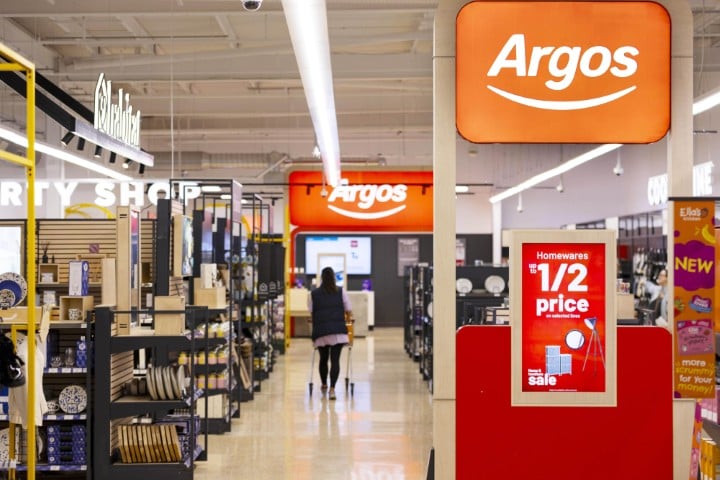
On 31 July, Sainsbury’s revealed it had sold Argos to Swift Partners for cash proceeds of at least £120 million. The consideration includes £70 million up front, and deferred payments plus cash from the sale of Argos’s distribution centre.
Swift is a new company established by Richard Pennycook, Trevor Strain and Matt Truman, who all have extensive retail and leadership experience. Pennycook is widely regarded as ‘the man who saved the Co-op’ after taking over as CEO in 2014, while Strain is a former CEO of Morrisons.
Swift, togther with digital technology investor True Capital, will ‘build on the strength of the Argos brand, multichannel model and store network’. Sainsbury’s will maintain long-term commercial agreements including renting Argos space in its stores and income derived from Nectar.
The supermarket expects the impact of the sale to be neutral on an underlying profit basis and mildly accretive at the EPS level. Revenue from Swift will partly offset the group’s interest expenses and lost operating income.
‘Significant opportunities’
For Sainsbury’s, the disposal is ‘a further step forward in our strategy’ said CEO Simon Roberts. ‘Having rebuilt the core strengths of our food business, this agreement allows us to focus all our resources and investment on the significant opportunities ahead.’
After selling off the banking and financial services business, and now Argos, Sainsbury’s is back to its core grocery offering. The firm says its focus now is on driving higher growth, higher margins and free cash flow generation.
For investors, though, the deal raises the intriguing question of how Sainsbury’s intends to grow its market share. Does it try to take over or merge with one of its rivals, or does it fall back on pricing to drive sales?
To merge or not to merge
Industry journal The Grocer takes up the debate: ‘Will Sainsbury’s go back for Asda? Not until 2029 it won’t (based on the ruling of the CMA). The similarly loss-making Morrisons is a possibility, however. Merchant bankers have been desperately trying to cook up a deal since well before Christmas. And Sainsbury’s now has more headspace to establish the CMA’s position amid the continued growth of Aldi and Lidl.’
Sainsbury’s has spent years establishing its food credentials, investing heavily in its Nectar, online and convenience offerings. It has also reallocated store space away from general merchandise to food categories to boost sales.
Whether, as The Grocer suggests, management now has the ‘headspace’ for a big merger is up for debate. Also, whether Morrisons’ owners CD&R are ready to give up on their £10 billion investment after five years is questionable.
Over that period, Morrisons’ market share has gone from 9.8% to 8.4% according to till roll data from Worldpanel. Meanwhile, Sainsbury’s has increased its market share to a multi-year high of 15.3%. That puts it in a better negotiating position than CD&R, in our view.
Current UK grocery market share versus five years ago
| Current share | Share 2021 | |
| Tesco | 28.0% | 27.3% |
| Sainsbury’s | 15.3% | 15.0% |
| Asda | 11.5% | 14.3% |
| Aldi | 10.7% | 8.1% |
| Lidl | 8.7% | 6.1% |
| Morrisons | 8.4% | 9.8% |
Source: Worldpanel
Potential for re-rating?
As a more streamlined group, without the earnings drag from Argos, Sainsbury’s could have wider appeal to investors. That is certainly the view of house broker Shore Capital, which sees potential for a rerating of the shares post-disposal.
Searching through Sainsbury’s results, it’s almost impossible to find figures for Argos’s operating profit or profit margin. According to The London Review, however, after accumulating losses during most of Sainsbury’s ownsership, the business generated £9 million of operating profit in FY26.
That was on sales of £4.1 billion, or just under 14% of the total for the Sainsbury’s group. In other words, 14% of sales were generating a 0.2% margin, while behind that sat around £1.1 billion of capital for 10 years.
Sainsbury’s says its retail operating profit margin in FY26 was just over 3%, which admittedly isn’t stellar but included Argos and general merchandise. We suspect the pure grocery business, led by the fresh food offering, probably generated more like a 5% operating margin.
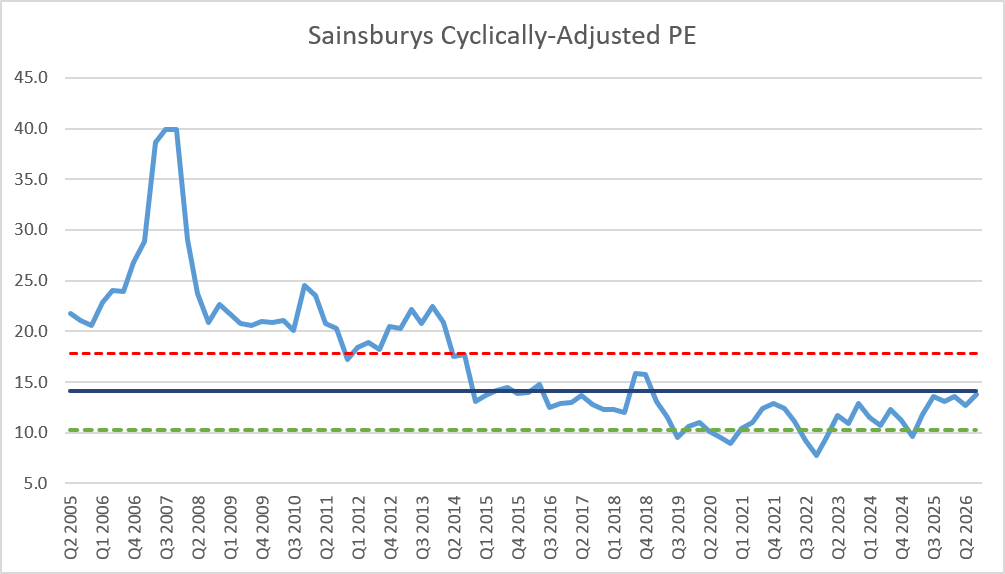
Over the last 20 years, we estimate Sainsbury’s has grown its earnings per share by a paltry 3% per year. On that basis, the shares are currently fair value on a cyclically-adjusted view, offering neither substantial upside potential nor downside risk.
If a refocused grocery offering translates into a higher group margin and a higher earnings growth rate, we can see a case for the shares rerating. Whether and how that happens is down to management and its ability to execute.