



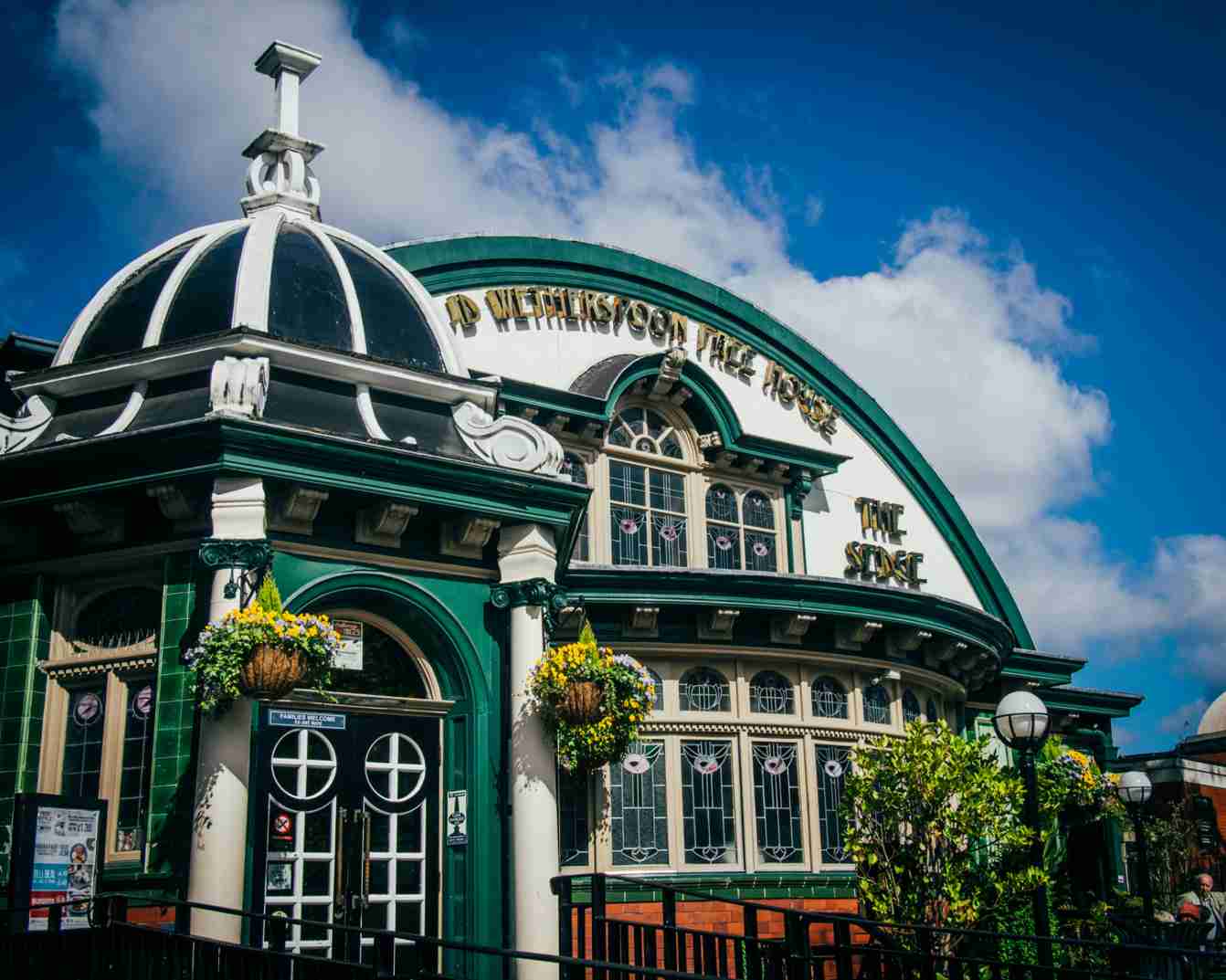
Investors raised a glass to JD Wetherspoon (LON:JDW) after the pubs group reported strong growth in like-for-like sales over the last nine weeks. There was also relief as chairman Tim Martin insisted ‘Spoons’ remains on track to achieve the FY27 consensus pre-tax profit estimate of £74 million.
‘In the last nine weeks, to 27 September 2026, like-for-like sales increased by 8.6%, helped, no doubt, by exceptional weather,’ said Martin.
Warm weather boost
He explained that in recent years, the FTSE 250 firm has made substantial progress in increasing the number of beer gardens and outside seating areas. ‘This has resulted in sales improving in hot weather whereas, in the past, sales sometimes declined,’ said Martin.
However, he also cautioned that Wetherspoon’s good start to the financial year is ‘at least partially due to weather, which will inevitably revert to the norm’.
Profits under pressure
News of a solid start to FY27 accompanied mixed results for FY26. These revealed a 5.2% increase in revenue to £2.24 billion, including a 4.2% uptick in like-for-like sales.
Encouragingly, the total revenue figure was 23% above the pre-pandemic year of FY19, highlighting the market share gains the company has served up in recent periods.
| Financial year | Total number of pubs | Pre-tax profit (£m) |
| FY26 | 792 | 58.6 |
| FY25 | 794 | 81.4 |
| FY24 | 800 | 73.9 |
| FY23 | 825 | 42.6 |
| FY22 | 852 | (30.4) |
| FY21 | 861 | (154.7) |
| FY20 | 872 | (44.7) |
| FY19 | 879 | 102.5 |
Source: JD Wetherspoon, FY26 results
And yet pre-tax profits plunged 28% to £58.6 million after significant finance and other costs. Wetherspoon prudently held the full-year dividend at 12p per share.
Bearing the brunt
In his chairman’s statement, Martin bemoaned the fact the hospitality industry has ‘borne the brunt of government-led tax and regulatory cost increases, especially in the last two budgets. This has resulted in pubs becoming even more expensive than supermarkets, leading to job losses, closures and high street dereliction.’
Martin said he hoped the powers-that-be will refrain from any further increases. He pointed out pubs and restaurants ‘pay around 40% of their receipts as taxes of one sort or another’. In addition, they provide ‘immense financial support to the Treasury, as well as social support to the community.’

Renowned for its value proposition, Wetherspoon continues to retain a loyal customer base during the cost-of-living crisis. According to the latest NIQ RSM Hospitality Business Tracker’, for August 2026, industry like-for-like sales were up 0.8%.
During this period, Wetherspoon’s like-for-likes grew by an impressive 7.7%. This was the 48th month in a row that the pub operator outperformed the tracker.
We are confident Wetherspoon will continue to win market share, but the company faces cost headwinds ranging from high energy and labour costs to property taxes. The pub chain has kept prices low to keep customers happy, but this has squeezed its margins.
Given the potential for further downgrades, and the uncertainty ahead of the Budget, we see no rush to own the shares.