




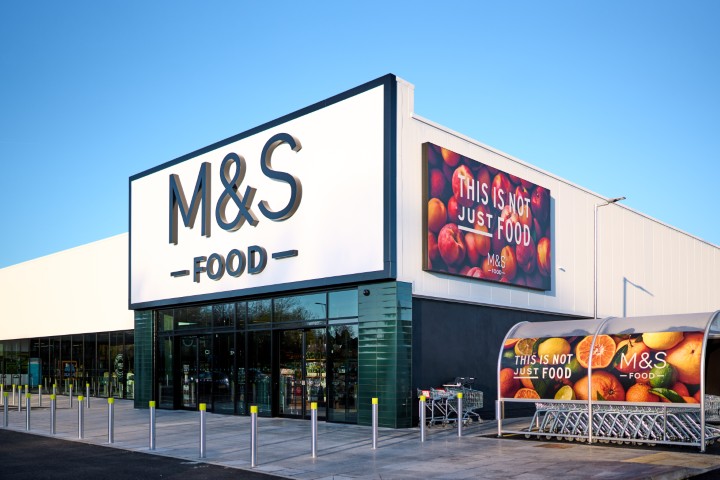
Food and clothing retailer Marks & Spencer (MKS) delivered FY26 profit which topped market expectations. Equally important, it said it expects profits to grow again after the disruption caused by last year’s cyber incident.
A tale of two halves
For the 12 months to March, M&S posted total sales of £17.37 billion, up 25% on the previous year. Excluding Ocado Retail, which M&S owns 50/50 with Ocado Group (OCDO), sales rose 1.9% to £14.18 billion.
Food sales increased 7% to £9.7 billion driven by like-for-like growth of 6.7% and a slight increase in prices. M&S UK food volumes grew 3.3% in a broadly flat market with an extra 800,000 shoppers during the year.
Ocado Retail generated sales of £3.2 billion, with M&S product sales up 17.7% on the platform to over £1 billion. Pleasingly, having made an operating profit of £15 million the business is a step closer to being self-funded.
Fashion, Home and Beauty sales declined by 7.7% to £3.9 billion due to the cyber incident in H1. Sales grew slightly in H2 as online trading was restored, but there were ‘long tail’ effects on product availability.
Adjusted pre-tax profit for FY26 was £671 million, down 24% from £881 million the previous year. However, it was comportably ahead of forecasts of around £655 million from analysts at Berenberg and house broker Shore Capital.
From recovery to expansion
The message in today’s statement is M&S has moved from the recovery phase to a renewed focus on growth. In Food, the firm aims to double volume sales by investing in stores, technology and supply chain capacity.
Part of this plan is to have 380 Food stores by 2027/28 including larger-format sites. During the year the group opened 12 new stores including three conversions of former Homebase sites, with positive results.
In Fashion, Home & Beauty, the aim is to double online sales and improve profitability. It also aims to genertate sustainable in-store sales through a focused network of 200 full-line outlets by 2027/28.
Reaching these targets means a substantial investment in the supply chain for Food and Non-Food products. Due to the surge Food volumes over the last five years, the firm has had to use temporary warehousing, adding to costs.
A new regional Food distribution centre is planned for Avonmouth and a new national centre will be built in Daventry. In Non-Food, a new automated distribution centre is being built in Lichfield while capacity has been increased at other sites.

Last year really was one of two halves for M&S given the cyber attack which knocked the business in H1. The crucial aspect of today’s update isn’t so much the beat but the change in the narrative from recovery to growth.
The Food business has been on a roll for several years, to the extent spare warehouse capacity has been taken up. The group’s plan to double Food volume sales within a few years means more investment in space.
The Fashion, Home and Beauty business also needs more capacity if the group is to double online sales, and again a plan is in place. With its strong balance sheet, there is no need to worry about financing these investments.
Assuming the group can grow its earnings from hereon in, the shares look cheap versus their history and versus the market. For value investors, and those who appreciate the power of brands, M&S is a strong contender at today’s price.
Read the press release here:
https://corporate.marksandspencer.com/investors