




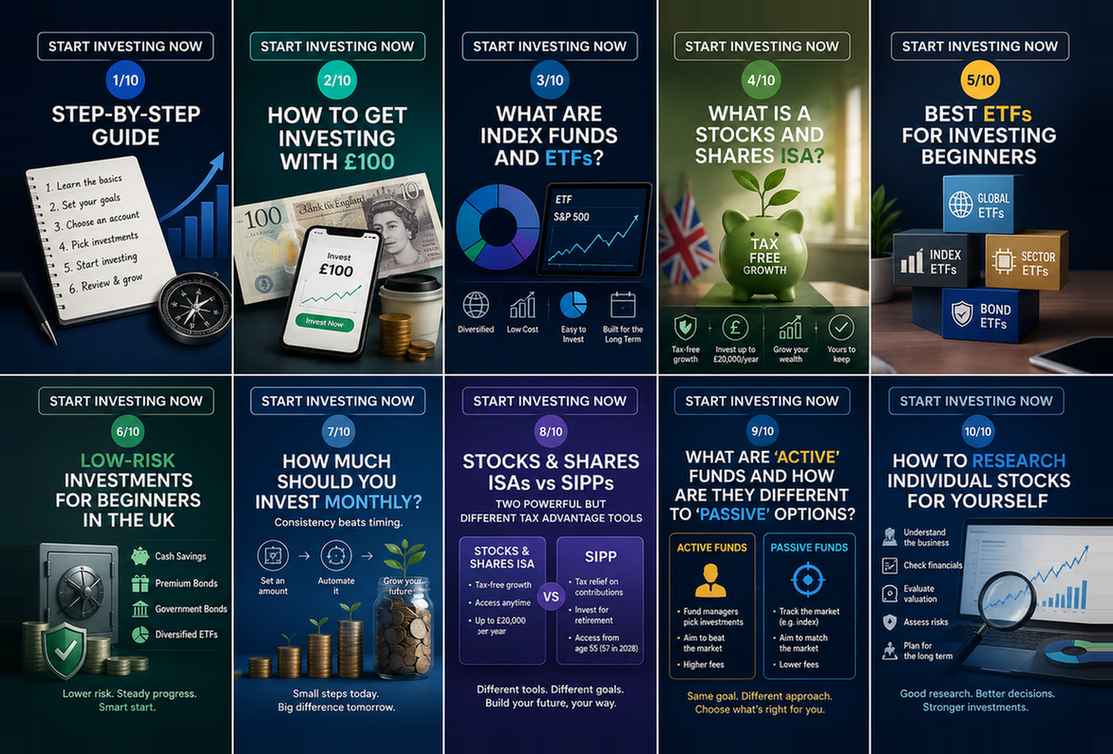
You can start investing in the UK with just £100 (or even less), and that £100 can be the foundation of a long-term wealth-building habit. In part 2 of our ‘Start investing now’ series (read part 1 here), we will show you exactly how to turn your first £100 into your first investment—step by step, with no jargon.
Investing is often misunderstood as something that requires thousands of pounds to start. The reality in 2026 is very different.
🧭 Step 1: Understand what £100 does for you
Let’s be clear:
£100 invested won’t make you rich. But it will do something more important:
👉 It will make you an investor.
That matters because wealth is built through:
- Starting early
- Staying consistent
- Letting time grow your money
- Even £100 invested can grow significantly over decades thanks to compounding.
Sharesify
🏦 Step 2: Open the right investment account
Before you invest your £100, you need somewhere to hold it.
Best option for UK beginners:
📊 Stocks and Shares ISA
A Stocks and Shares ISA lets you:
- Invest without paying UK tax on gains
- Invest up to £20,000 per year (2026 limit)
- Keep things simple and beginner-friendly
👉 If you’re serious about investing in the UK, this is almost always the best starting point.
📱 Step 3: Choose an investing platform/app
You don’t need a financial advisor, any investing knowledge or technical skills. You just need access to the right platform.
Popular UK platforms (2026) include:
- Hargreaves Lansdown (largest provider by market share)
- AJ Bell is recommended for comprehensive investment options
- Interactive Investor is often cited for its flat monthly fee structure, making it cost-effective for larger portfolios
- Trading 212 is a low-cost option where you pay no commission
- Freetrade is an popular alternative low-cost/no commission option that also offers fractional shares
- eToro is designed for more frequent investors and comes with social features
- Vanguard is a primary choice for buying low-cost passive index funds
Which?
What matters most:
- ISA availability
- Low fees: Compare platform fees (usually a percentage) vs flat-fee brokers, plus trading fees and foreign exchange costs
- Easy to use and understand interface
- Access to a wide variety of low-cost ETFs
- Fractional shares (optional)
[NB: Fractional shares allow you to buy a stock a bit at a time. For example, if you start investing £25 a month, say, and wanted to invest in the iShares Core MSCI World UCITS ETF (SWDA), whose stock costs more than £100 each (16 April 2026).
Fractional shares would allow you to buy £25 worth of the ETF’s shares, so you’d be putting all your monthly investment to work right away. But fractional shares are only offered by some UK investing platforms.]
👉 Tip: Don’t overthink this step. The best app for you is the one you are most comfortable using.
📊 Step 4: Decide what to invest in
This is where most beginners get stuck—but it’s simpler than you think. You only need ONE simple investment to get started, although others can be added as you become more confident.
Best beginner option:
🌍 An Index fund or exchange-traded fund (ETF for short)
These are single investments that spread your money across hundreds, even thousands of different companies at once. That helps you spread risk.
For example, if some of the shares in the fund fall over a period, these declines will be counter-balanced by others that rise, helping to smooth your investment returns and limit your risk.
Why beginners like them:
- Instant diversification (less risk)
- No need to pick individual stocks
- History of long-term steady growth
Example beginner strategy:
- With your £100, select 1 global index fund or ETF
- Invest monthly
- Hold for 10+ years
It’s that simple to get started.
👉 Simplicity beats complexity here.
⚖️ Step 5: Understand risk before you invest
This is important. All investing involves risk because:
- Markets fluctuate daily
- So, your £100 can initially go fall in value
But…
- Short-term losses are normal as market fluctuate
- History shows that long-term investing (10+ years) rewards patience
- Diversified funds reduce risk significantly
👉 Rule: Only invest money you won’t need for at least 5+ years.
💸 Step 6: Make your first investment
Here’s the process, broken down into easy-to-follow steps:
1. Open your ISA account – choose your platform/app and open a Stocks and Shares ISA
2. Deposit £100 – you’ll be asked to connect your new Stocks and Shares ISA with your bank account during set-up (so have your account detail to hand), making an initial deposit, and regular monthly payments very simple
3. Search for your selected fund – select a global ETF for low-cost, broad-market diversification
4. Buy it – follow your platform’s instructions to invest your £100 in one go
That’s it.
You will have then joined the millions of Brits who invest for the long-term for their own brighter financial future.
📈 Step 7: What happens after you invest
After your first £100 investment:
- Expect the value of your investment to fluctuate (go up and down in value) daily
- DO NOT react, avoid constantly checking
- Let your investment sit in the background and allow the market do what it does
👉 The goal is NOT short-term movements
👉 Long-term growth over years and decades is
🔁 Step 8: Turn £100 into a habit
Your first £100 is just the beginning, real wealth comes from consistently and frequently adding to more money over many years.
👉 This is the real secret to long-term investing success
Try this:
- £25/month → beginner habit
- £50/month → solid long-term builder
- £100/month → strong wealth foundation
History shows that even investing small amounts each month will beat returns of leaving your cash in a savings account.
📊 Example beginner setup (simple and realistic)
Why wait – start today:
- Account: Stocks and Shares ISA
- App: Any of the ones mentioned earlier are suitable for beginners (Hargreaves, AJ Bell, Vanguard, Freetrade etc)
- Investment: Global index fund ETF – the iShares Core MSCI World UCITS ETF (SWDA) is the UK’s most popular, but others are just as good
- Initial investment: £100
- Monthly plan: £50/month
This is a complete beginner guide to get your investment portfolio up and running.
🚫 Common mistakes to avoid
❌ Waiting for more money – You don’t need it. Start now.
❌ Trying to pick ‘winning’ or ‘hot’ stocks from social media – Most beginners underperform the market this way.
❌ Panicking when markets drop – Markets will fall at some point, that’s guaranteed. But they also recovery and rise, so expect ups and downs.
❌ Overcomplicating your first investment – Keep things simple at the start, there’s plenty of time to learn more and become a more confident investor (you’re reading this, so you’ve already started your journey).
❌ Constantly looking for new investment ideas – stick to your one fund at the start and feed regular money into that fund.
🧠 Key takeaway
- Your first £100 investment is not really about profit: it’s about developing good investing habits. It’s about behaviour.
- Once you start, you’ve will have already completed the most important part of investing: beginning. Everything else is consistency.
🚀 What to do next
Once you’ve invested your first £100 and set up monthly investing:
- Stick to index funds until you are more confident
- Ignore short-term noise, markets will go up and down
- Think in years and decades, not days and weeks
Want to learn more? Read Part 3 of Sharesify’s 10-part ‘Start investing now’ simple guide…
Revisit Part 1…
You might also like:
