




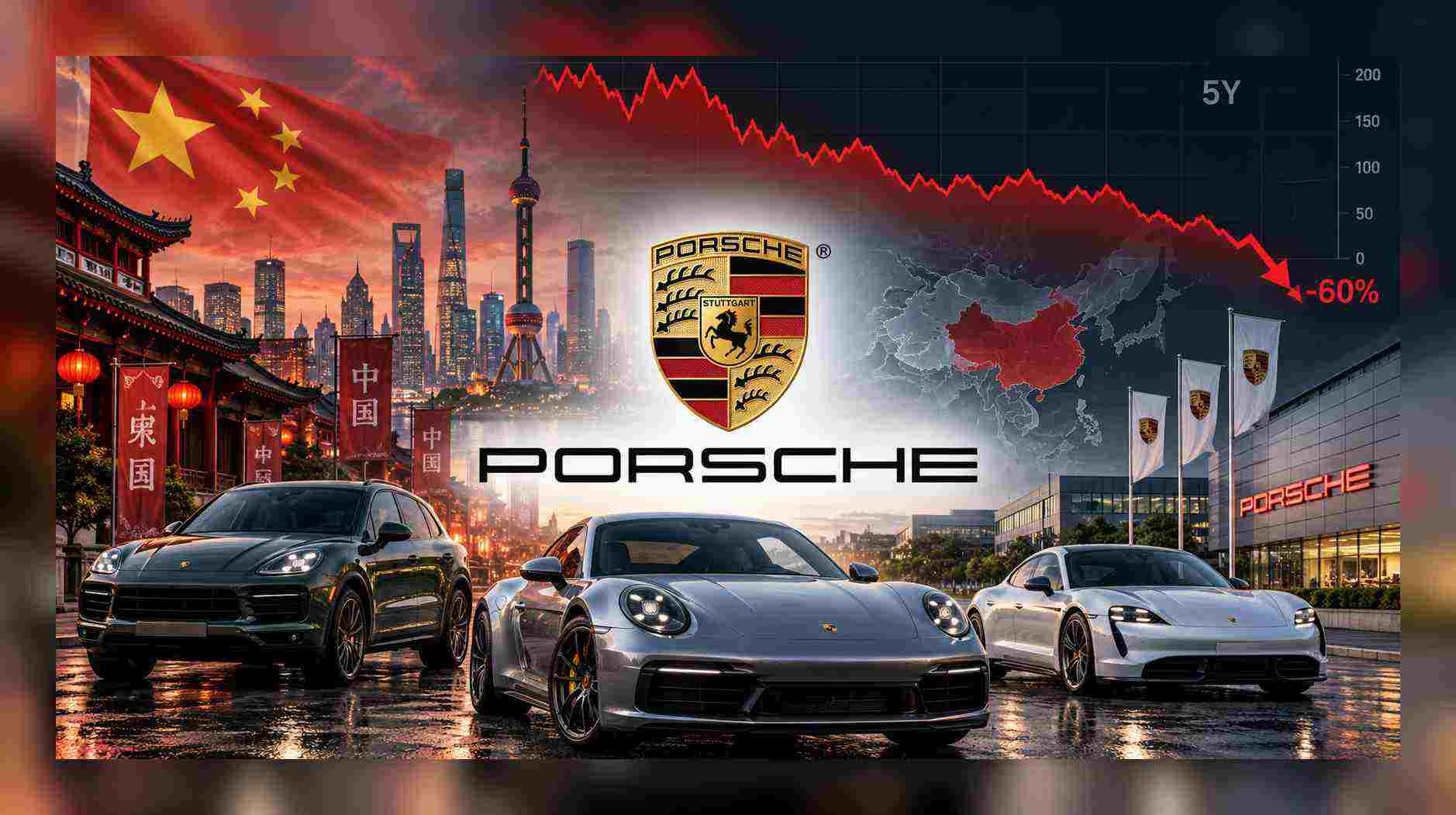
Porsche AG (ETR:P911) shares rose around 2.3% after the company reported a sharp rebound in nine-month profitability and, crucially, reaffirmed FY2026 guidance. The market is increasingly looking beyond collapsing volumes towards whether CEO Michael Leiters can rebuild Porsche’s margins through pricing, product mix and lower costs.
| Porsche AG (ETR:P911) | Price: €42.78 (+3.5%) | Market cap: €19.58bn |
Q3 numbers: profit recovery despite falling sales
| Porsche AG | 9M 2026 | 9M 2025 | Change |
| Revenue | €25.28bn | €26.86bn | -5.9% |
| Operating profit | €1.74bn | €0.04bn | +€1.70bn |
| Operating margin | 6.9% | 0.2% | +6.7pp |
| Deliveries | 178,532 | 212,509 | -16.0% |
| Automotive EBITDA margin | 17.3% | 11.9% | +5.4pp |
| Automotive net cash flow | €2.50bn | €1.34bn | +87% |
| Automotive net liquidity | €8.23bn | — | — |
The headline improvement is striking, although comparisons are flattered by last year’s €2.7bn of strategic realignment costs. Those costs fell to about €500m in 2026.
The more encouraging signal is that Porsche generated substantially more profit from fewer cars. The 911 — its highest-margin flagship — was the only model to increase sales, rising 12%.
What is moving the shares?
The central investment debate has changed from ‘Can Porsche grow volumes?’ to ‘Can Porsche become more profitable with fewer cars?’
Management’s answer is increasingly clear. Leiters said Porsche is focusing on ‘a competitive cost structure and a sustainable increase in our profitability’, while its strategy prioritises value over volume.
That means more expensive, highly customised derivatives, fewer lower-return vehicles and tighter cost control. Porsche’s Q3 margin performance provides some early evidence this is working: Reuters reported that Jefferies highlighted better-than-expected Q3 margins of more than 10%.
There is also a useful cash-flow story. Automotive net cash flow reached €2.5bn, although this included proceeds from the €593m gain on the Bugatti Rimac/Rimac transactions, so investors should not extrapolate the Q3 cash conversion directly.
FY2026 guidance unchanged
| FY2026 target | Guidance |
| Revenue | €35–36bn |
| Operating return on sales | 5.5–7.5% |
| Automotive EBITDA margin | 15–17% |
| Automotive net cash-flow margin | 5.5–7.5% |
| BEV share | 24–26% |
Management expects significant volume declines because of the phase-out of the 718 and ICE Macan, difficult Chinese conditions and changes to US EV incentives. However, the electric Cayenne should lift BEV mix in H2.
What analysts are saying
The analyst view is becoming more nuanced. Deutsche Bank argued that Porsche’s premium mix should offset weak deliveries, noting strong demand for higher-margin GTS, Turbo and GT derivatives. It rates Porsche Buy with a €55 target price.
The catch is 2027. Management describes it as a ‘transitional’ and ‘trough’ period, with lower volumes, weaker fixed-cost absorption and continuing China pressure.
Porsche stock: pros and cons
| Pros | Cons |
| Powerful luxury brand and pricing power | China remains structurally difficult |
| Improving margins despite lower volumes | 2027 likely to be an earnings trough |
| 911 sales +12% | Deliveries down 16% |
| €8.2bn automotive net liquidity | US tariffs remain a headwind |
| Cost-cutting has substantial upside potential | EV transition remains strategically difficult |
| Value-over-volume strategy could lift returns | Restructuring still requires significant cash |
Sharesify investor verdict
Porsche is becoming an increasingly interesting turnaround rather than a conventional car-growth story.
The Q3 numbers suggest Leiters’ strategy is beginning to work: fewer cars, better mix, stronger pricing and dramatically lower restructuring costs are producing a major rebound in profitability.
But investors should resist treating the €1.74bn nine-month operating profit as the new normal. One-off restructuring comparisons and asset-sale proceeds flatter 2026, while management itself expects 2027 to be the trough year.
Verdict: cautiously bullish for long-term investors willing to tolerate near-term earnings volatility. The key catalyst is evidence that Porsche can sustain margins as restructuring benefits fade — particularly through 2027 — while maintaining the exclusivity and pricing power of the brand.
You might also like:
