



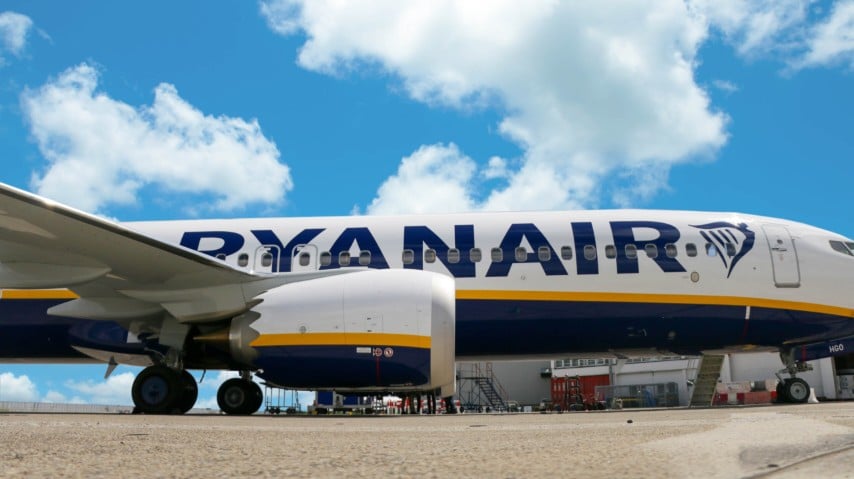
Low-cost airline Ryanair witheld its FY27 earnings guidance claiming it had ‘zero visibility’ for the final quarter. The Dublin-based firm posted a 15% decline in H1 net profit as operating costs rose 10% and fares declined.
The airline group carried 125.8 million passengers in the six months to September, a 5.7% increase on the previous year. However, the average fare fell 4% to €55.70 due to ‘consumer hesitancy’ and later bookings caused by the Middle East conflict.
‘Zero visibility’ for Q4
Revenue for H1 increased 3% to €10.08 billion thanks to higher passenger numbers and higher ancilliary revenue. In contrast, operating costs jumped 10% as 20% of jet fuel costs were unhedged and prices doubled.
The airline said its FY27 fuel costs, which are 80% hedged at $67/barrel), were expected to be around $6 billion. It argues its cost advantage has widened over its EU competitors, and it has increased its FY28 hedge to 25% at around $95/barrel.
For the year to March 2027, traffic is expected to grow 3% to 214 million passengers, as previously guided. The firm added that while Q3 demand was strong, the booking window was closer-in which reduced visibility.
Therefore, it added, Q3 fares ‘will heavily depend on the strength of close-in Oct./Nov. school mid-term and Christmas bookings. As is normal at this time of year, we have zero Q4 visibility. It therefore remains too early to provide meaningful FY27 profit guidance.’
FY28 outlook even less clear
Without a swift resoltion to the Middle East situation, jet-fuel prices will remain elevated well into 2027, the firm said. Therefore, as its hedges roll off, it expects its fuel costs to increase by around €2 billion.
In H1 2028, the group will add the first 16 new Boeing MAX-10s to its fleet. These have 20% more seats yet use 20% less jet fuel. It also expects European short-haul fares to increase ‘materially’ to reflect high fuel prices and potential capacity cuts at its competitors.
Yet even with more efficient aircraft, a reduction in routes and higher fares, the airline still needs to make cost savings. It is currently reviewing airport churn, maturing labour agreements and crewing ratios in an effort to reduce overheads. All of this means the FY28 outlook is even less clear than FY27.

Given Ryanair is the largest airline group in Europe, what it says carries weight. Although easyJet (LON:EZJ) is in takeover talks, it still faces the same challenges and the near-term outlook may be just as unclear. Meanwhile, we are interested to hear what Jet2 (LON:JET2) says when it releases H1 results later this month.
Interestingly, in September holiday firm On The Beach (LON:OTB) released a positive FY26 trading update and an equally positive FY27 outlook. Bookings for FY26 were up 9% and pre-tax profit is seen in the top half of the guidance range.
For FY27, the asset-light firm sees profit increasing by between 25% to 50%, a world away from Ryanair’s troubles. Yet On The Beach shares are down 22% this year and down almost 75% from their peak. Given it has £60 million of net cash, having returned £67 million over the last two years, that puts the underlying business on six times pre-tax earnings.
