



In this article we discuss three ways to reduce risk in your stock portfolio, if you feel the need. As investors, we all have different risk appetites: some people embrace it while others try to minimise it.
However, all investing involves some kind of risk in order to generate a return. What you need to work out is what level of risk you personally are comfortable with.
Sometimes, such as when markets are in a steady uptrend, risk is the last thing you might think about. Conversely, when markets are choppy and volatility is rising you might feel you want to adjust your risk.
Recently, markets have become more volatile than normal with large stocks making unusually big daily moves on newsflow. Also, the rally in precious metals has suddenly reversed which may have caught out those who thought they were a low-risk investment.
WAYS TO MEASURE RISK
Identifying risk is far from straightforward, in investing as in life. However, there are a couple of indicators which have a fairly good record of tracking market risk.
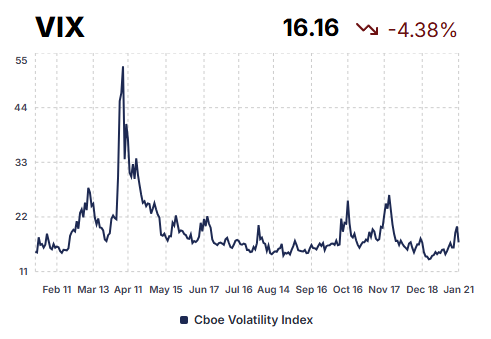
The first is the VIX Index or Volatility Index published by the CBOE, also sometimes known as the ‘fear index’. Calculated in real time, it measures the implied volatility of the S&P 500 index over the next 30 days.
A VIX reading of between say 10 and 15 suggests low volatility and stable markets. It can also suggest investors are complacent about market risk. A reading above 30, or a sudden increase from low levels, suggests a risk of greater market volatility. This is usually accompanied by a rise in risk aversion and a ‘flight to safety’ among investors.
A second, far less technical measure of risk, is the ‘Greed & Fear’ Index published by CNN. The index is a compilation of seven different indicators which reflect US market behaviour and investor sentiment.
Unlike the VIX, both Extreme Greed and Extreme Fear can be a precedent for increased market volatility. A reading in the middle, on the other hand, suggests low volatility and high levels of investor complacency.
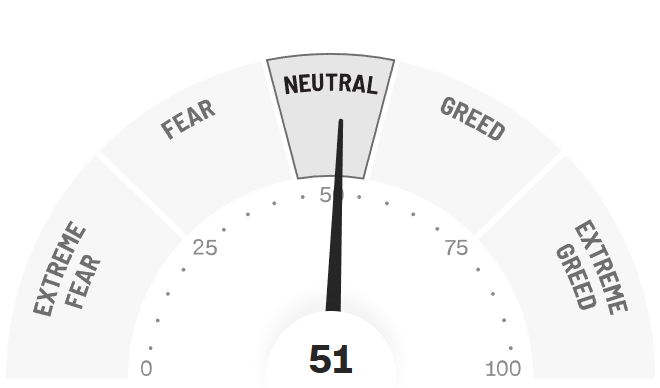
Interestingly, if we look at the factors behind the current reading, there are signs of both Greed and Fear. US market strength and breadth signal Greed, while demand for safe-haven stocks and put options signal Fear.
For now, these factors are balancing each other out, but the equilibrium may be short lived. Therefore, this could be a good time to think about dialing down risk in your portfolio.
WAYS TO REDUCE RISK
The first and easiest option is to reduce your overall market risk by reducing your exposure and increasing your cash weighting. This might mean trimming your holdings across the board or selling a few individual stocks.
Having cash gives you optionality, so if prices fall you can add back to your holdings at a lower price. It may also mean you can buy stocks you had short-listed which were previously too expensive.
Don’t forget, cash is also an asset class in its own right and there are some attractive interest rates available. If you don’t want to own cash, there are money-market funds which will do the same job for you.
Alternatively, the UK 10-year government bond yield is around 4.5% which is not a bad return for no risk. Corporate bonds offer higher interest rates, but come with higher risk, so you need to do your homework.
The second option is to reduce concentration risk by making sure you aren’t over-exposed to one stock or ‘theme’. One example would be US technology stocks or US stocks overall as the World Index index is quite ‘top-heavy’.
If you are reducing concentration risk, you might want to go a step further and make each holding equal-weighted. This has the advantage that if any one stock disappoints it doesn’t have a disproportionate impact on your portfolio.
If you own US stocks via an S&P500 ETF, maybe look at the iShares S&P 500 Equal Weight ETF (ISPE) instead. Year-to-date, the equal-weighted version has gained 3.6% while the cap-weighted index is flat.
CONSIDER CAPITAL PRESERVATION
A third option for reducing risk is to move away from the mainstream and invest in capital preservation trusts. These are designed to withstand increased periods of market volatility and preserve your capital, as their name suggests.
Among the most popular of these are Capital Gearing (CGT), Personal Assets (PNL) and Ruffer Investment Company (RICA). None offer guarantees, but all three have a track record of outperforming during periods of extreme market stress.
Capital Gearing has been managed since 1982 by Peter Spiller, the longest-serving manager in the trust sector. In that time, the portfolio has only had two down years with the worst loss being 4% in 2022.
Personal Assets is co-managed by Sebastian Lyon, founder of Troy Asset Management, and Charlotte Yonge. Over the last decade, the trust has returned 78% with only two down years and a worst loss of 3.5% in 2022.
Ruffer is managed by a team led by Jasmine Yeo and aims not to lose money in any 12-month period. Over the last decade, the trust has returned 66% with two down years and a worst loss of 6.2% in 2023.
You may also like these stories:
