



Author: Steven Frazer

Steven Frazer
Steven Frazer has worked in the investment space for nearly 30 years and was Shares magazine's (owned by AJ Bell) technology word basher and analyst for close on 15 years, covering all the major tech developments right back to the dot com boom and bust (AI, cloud computing, cybersecurity, robotics, digital commerce and more). He is a Spurs obsessive, ska junkie and loves a good book about physics. Winner of the 2013 UKTech journalist of the year gong and a TytoPR #Tech500 influencer in 2018 & 2019. Find him at LinkedIn: Click Here
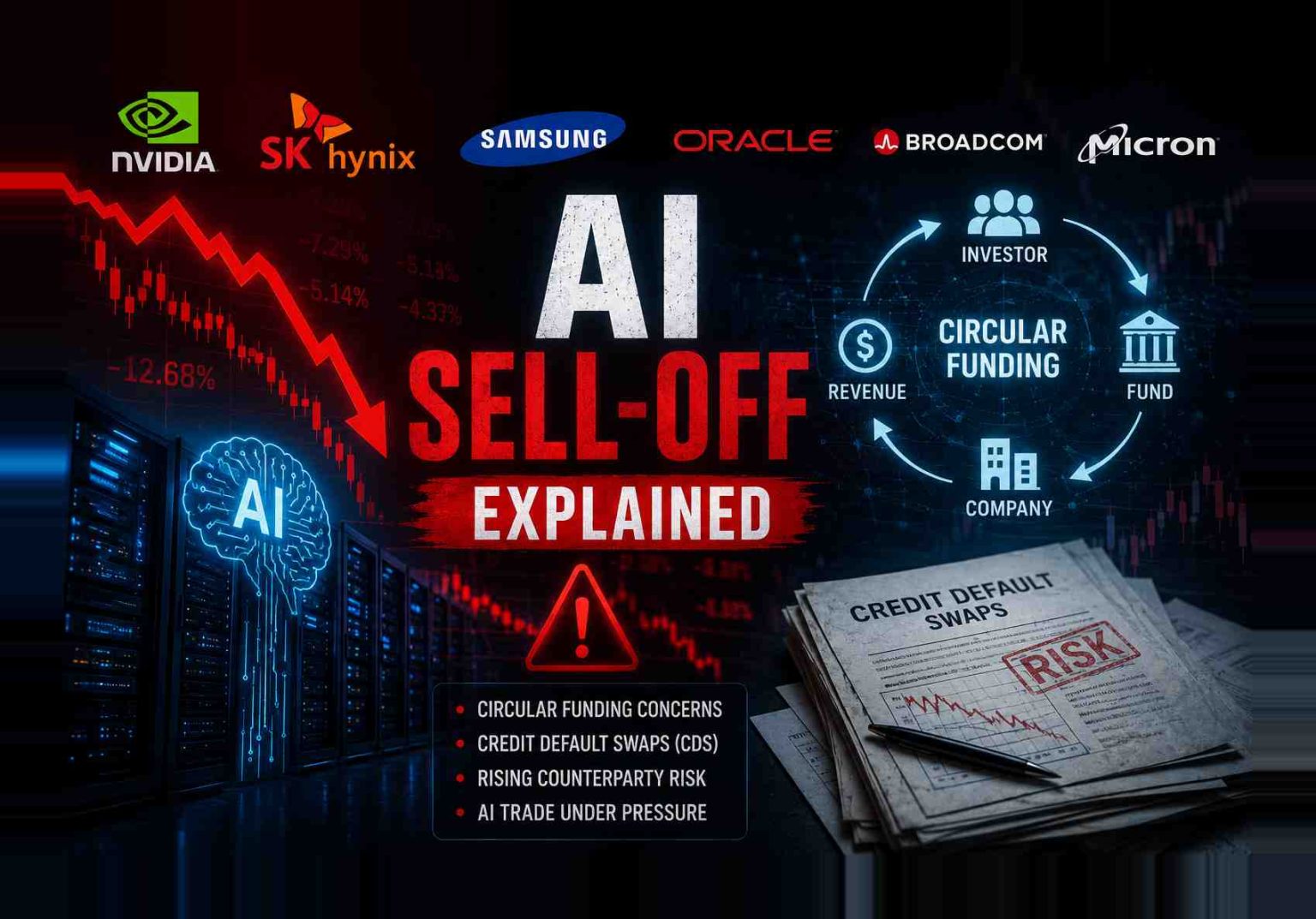
The AI investment theme has gone from market darling to market concern in just a few weeks. Semiconductor shares have led the decline as investors question whether the enormous spending on AI infrastructure can continue indefinitely. South Korea’s KOSPI index, dominated by chip giants Samsung (LON:SMSN) and SK Hynix (NASDAQ:SKHY), has slumped nearly 40% in barely a month, while Nvidia (NASDAQ:NVDA), Micron (NASDAQ:MU), Advanced Micro Devices (NASDAQ:AMD) and many others have struggled for weeks. The latest trigger has been growing concern over ‘circular funding’ alongside rising credit default swap (CDS) prices for several AI-linked companies. Neither necessarily signals a financial…
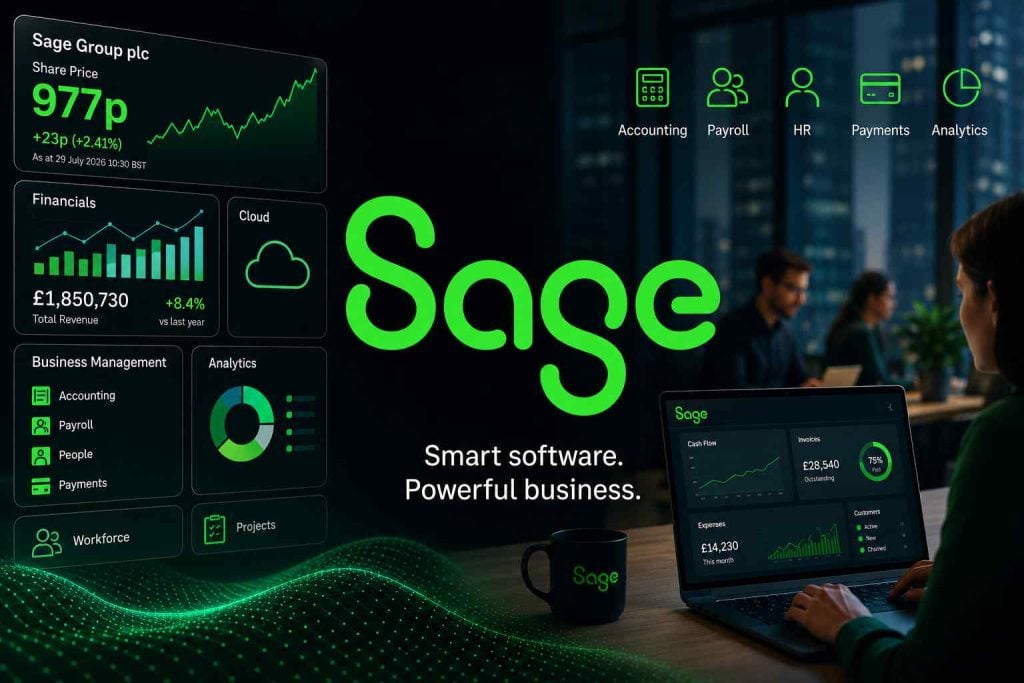
FTSE 100 software group Sage (LON:SGE) continues to execute exceptionally well as it delivered another high-quality set of H1 results, continuing its transformation from a traditional accounting software provider into a cloud-based, AI-enabled subscription business for small and medium-sized enterprises (SMEs). Revenue, profits and cash generation all exceeded or met expectations, prompting management to raise full-year revenue guidance. While operational execution remains impressive, the shares have already rerated significantly over the past two years, meaning investors increasingly need earnings growth to justify the premium valuation. Sage investor relations Sage (LON:SGE)Price: 977p (~+4%)Market cap: £8.80bn What does Sage do? Sage develops…
Cadence Design Systems (NASDAQ:CDNS) delivered another strong quarter, reinforcing its position as one of the biggest beneficiaries of the AI semiconductor investment cycle that combines strong recurring revenue, industry-leading technology and exposure to multiple long-term growth themes. Better-than-expected earnings, higher full-year guidance and continued demand from leading chip designers such as Nvidia (NASDAQ:NVDA), AMD (NASDAQ:AND), Broadcom (NASDAQ:AVGO) and TSMC NYSE:TSM) were enough to send the shares nearly 4% higher in after-hours trading. For UK investors looking beyond the familiar AI names, Cadence offers a less obvious way to invest in artificial intelligence. Rather than manufacturing chips, it supplies the software…
Enterprise software has been one of 2026’s weakest-performing technology sectors as investors reassessed how generative AI could affect traditional subscription software business models. The result has been a sharp derating across many high-quality businesses, with several former market favourites trading 20-40% below recent highs despite continuing to generate strong cash flow. Analysts increasingly argue the sell-off has become indiscriminate, creating selective opportunities for long-term investors with a best balance of quality, valuation and long-term AI exposure. US software CompanyInvestment caseValuation viewMain riskBest suited toMicrosoftAI leader with AzurePremium but more reasonableHeavy AI spendingCore long-term investorsAdobeCreative software dominanceCheapest in yearsAI image generationValue…

Vodafone’s (LON:VOD) Q1 trading update gave investors something they have not seen consistently for years: improving momentum and the prospect that it is becoming a stronger income story. Organic service revenue rose 5.2%, adjusted EBITDAaL (Earnings Before Interest, Tax, Depreciation, Amortisation, and after Leases) increased 6.2%, and management now expects both profit and free cash flow to come in at the upper end of full-year guidance after a strong opening quarter. Growth was broad-based across Europe and Africa, helped by continued cost savings and the consolidation of Safaricom. For most UK retail investors, however, the key question is not whether…
Chinese equities have gone through an extraordinary boom-bust-recovery cycle. Regulatory crackdowns, the property crisis, weak consumer confidence and geopolitical tensions crushed valuations from 2021 onwards. Then 2025 brought a powerful rebound: the AIC’s China/Greater China investment trust sector gained roughly 42% in the 12 months to February 2026, helped by improving policy support, technology enthusiasm and deeply depressed starting valuations. The picture in 2026 has become much more uneven. China’s economy continues to grow, but at a slower rate, property remains problematic and geopolitical risk has risen. For UK retail investors, that creates an unusual combination: potentially attractive long-term valuations…
Intel’s (NASDAQ:INTC) turnaround gathered momentum in the second quarter, with revenue and profits comfortably beating Wall Street forecasts and AI-related data-centre demand emerging as a powerful growth engine. There is definitely positive operational momentum, but a more demanding valuation. Revenue jumped 25% year-on-year to $16.1 billion, versus market expectations of roughly $14.4 billion. Adjusted earnings of $0.42 per share were around double consensus forecasts, while adjusted gross margin recovered to 41.8%. Intel investor relations Intel (NASDAQ:INTC)Price: $100.23 (+4.1% after-hours)Market cap: $524.4bn Most strikingly, Data Center and AI (DCAI) revenue surged 59% to $6.3 billion. Q2 2026ReportedApprox. forecastYoYRevenue$16.1bn~$14.4bn+25%Adjusted EPS$0.42~$0.21–$0.22Improved from lossAdjusted…

Thermo Fisher Scientific’s (NYSE:TMO) second-quarter results delivered something investors in the life-sciences tools sector have been waiting for: stronger evidence that the post-pandemic downturn is giving way to a broader recovery. Thermo Fisher proving that stronger organic growth and margin expansion can be sustained. Revenue and earnings beat Wall Street forecasts, organic growth accelerated to 5%, margins expanded and management raised full-year guidance. Importantly, the improvement was broad-based, with pharma and biotech demand healthy, academic and government markets returning to growth and analytical instruments performing strongly. Thermo Fisher investor relations Thermo Fisher Scientific (NYSE:TMO)Price: $572.32 (+8.7%)Market cap: $212.69bn Investors responded…

Tesla’s (NASDAQ:TSLA) second-quarter earnings call gave investors plenty to debate beyond electric cars. Attention centred on Elon Musk’s expanding business empire — spanning Tesla, SpaceX (NASDAQ:SPCX), AI, robotics and autonomous driving — and the possibility that some of these interests could eventually be brought closer together, although investors chief worry appears to be that Tesla is becoming increasingly capital intensive. Musk did not announce a Tesla-SpaceX merger, nor did management suggest a transaction was imminent. But the discussion kept alive the possibility of greater consolidation across Musk-controlled businesses. Tesla investor relations Tesla (NASDAQ:TSLA)Price: $353.02 (-5.6% after-hours)Market cap: $1.10tn More questions…
Alphabet’s (NASDAQ:GOOG) second-quarter results delivered one of the clearest signals yet that its enormous AI investment programme is translating into revenue growth. The standout was Google Cloud, where revenue surged 82% year-on-year to $24.8 billion. Search also remained remarkably resilient despite fears that generative AI could undermine Google’s traditional business model, with Search and other revenue rising 17% to $63.3 billion. Alphabet investor relations Alphabet (NASDAQ:GOOG)Price: $330.72 (-3.3%)Market cap: $4.02tn Yet Alphabet shares initially fell around 3% after hours as investors focused on the extraordinary cost of competing at the frontier of AI. Capex explosion Alphabet spent $44.9 billion on…