




Author: Steven Frazer

Steven Frazer
Steven Frazer has worked in the investment space for nearly 30 years and was Shares magazine's (owned by AJ Bell) technology word basher and analyst for close on 15 years, covering all the major tech developments right back to the dot com boom and bust (AI, cloud computing, cybersecurity, robotics, digital commerce and more). He is a Spurs obsessive, ska junkie and loves a good book about physics. Winner of the 2013 UKTech journalist of the year gong and a TytoPR #Tech500 influencer in 2018 & 2019. Find him at LinkedIn: Click Here
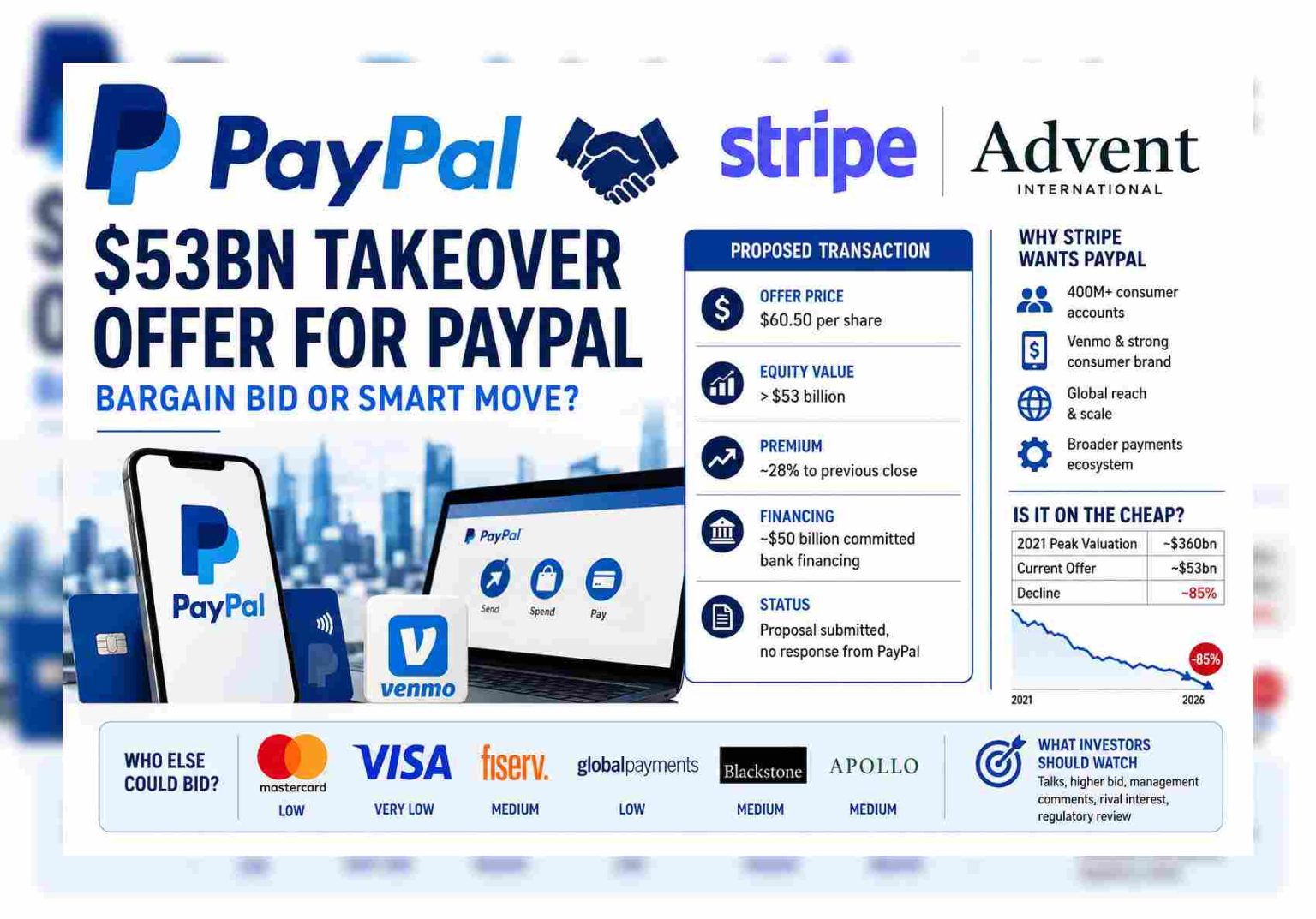
A surprise $53 billion joint takeover proposal from Stripe and Advent International has thrust PayPal (NASDAQ:PYPL) back into the spotlight. According to Reuters and the Financial Times, the consortium has offered $60.50 per share, around a 28% premium to PayPal’s previous closing price, with roughly $50 billion of committed bank financing already lined up. This appears to be a credible takeover proposal rather than unfounded market speculation, but PayPal has not responded and there is no confirmation that talks are underway, and there is no certainty a transaction will happen. For UK retail investors, the key question is whether this…

Dutch chip equipment manufacturer ASML (AMS:ASML) delivered another impressive quarter, comfortably beating market expectations and, crucially, raising its full-year outlook for the second time this year. The results reinforced ASML’s position as arguably the most important company in the global AI semiconductor supply chain, with demand for its lithography systems continuing to outstrip supply. For UK retail investors, the key question is no longer whether ASML is a high-quality business—it clearly is—but whether today’s share price already discounts years of exceptional growth. ASML investor relations ASML (AMS:ASML)Price: €1,638.20 (+5.3%)Market cap: €627.83bn Q2 2026: Reported results vs expectations MetricReportedConsensusResultRevenue€9.33bn~€9.1-9.2bn✅ BeatNet income€2.92bn~€2.8bn✅…
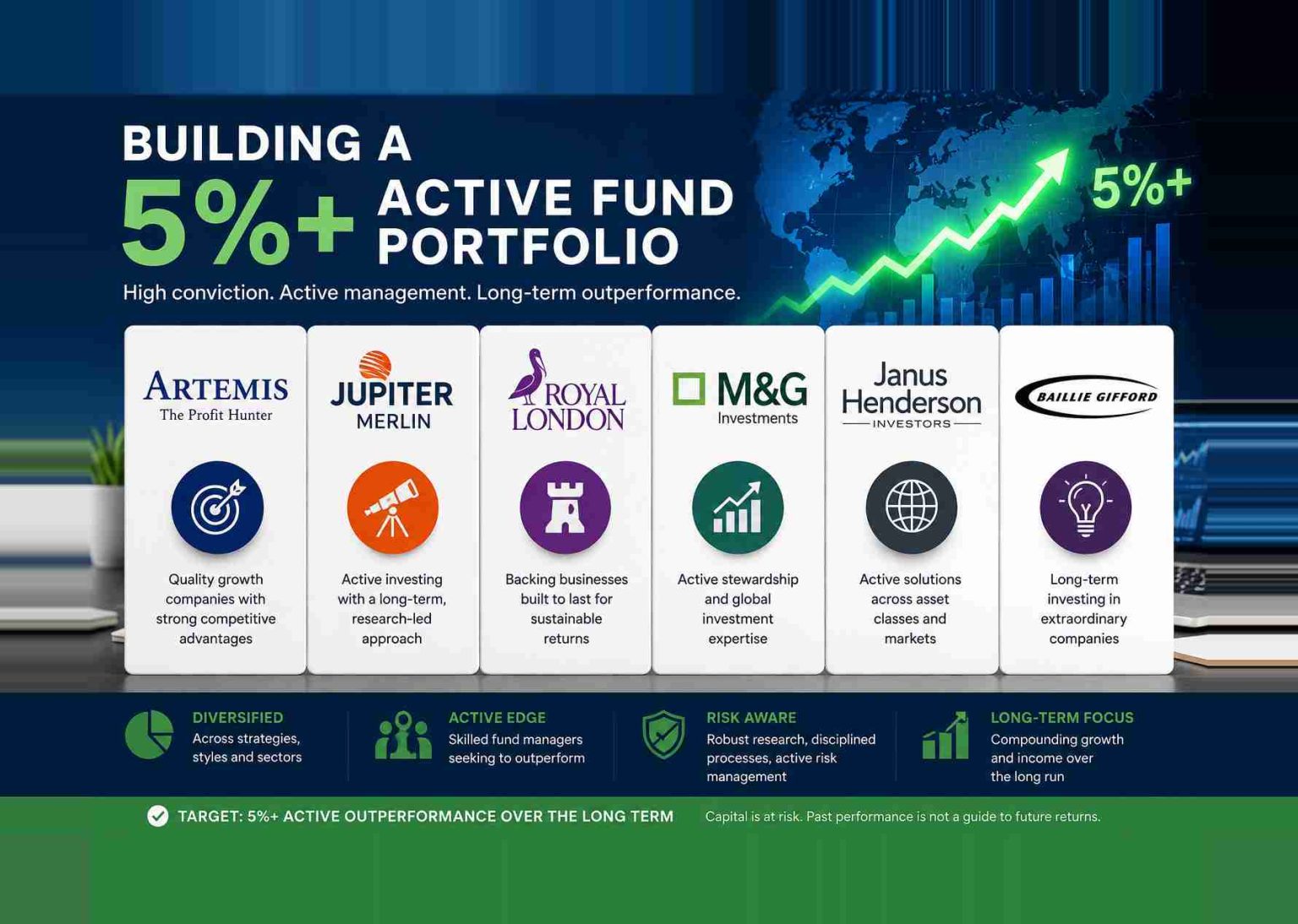
For UK investors who want a regular income without buying individual dividend shares, a portfolio of actively managed OEICs (open-ended investment companies) can provide broad diversification across UK equities, global shares, bonds and specialist income assets. By blending higher-yielding equity income funds with strategic bond and multi-asset income funds, it is possible to target an overall portfolio yield of around 5%-5.5%, although distributions are never guaranteed and can rise or fall. Pure income vs total return: what matters most for UK retirees? Example portfolio FundSuggested weightingHistoric yieldArtemis Income Fund20%~4.1%Jupiter Merlin Income Portfolio10%~4.8%Royal London Short Duration Global High Yield Bond Fund15%~6.5%M&G…
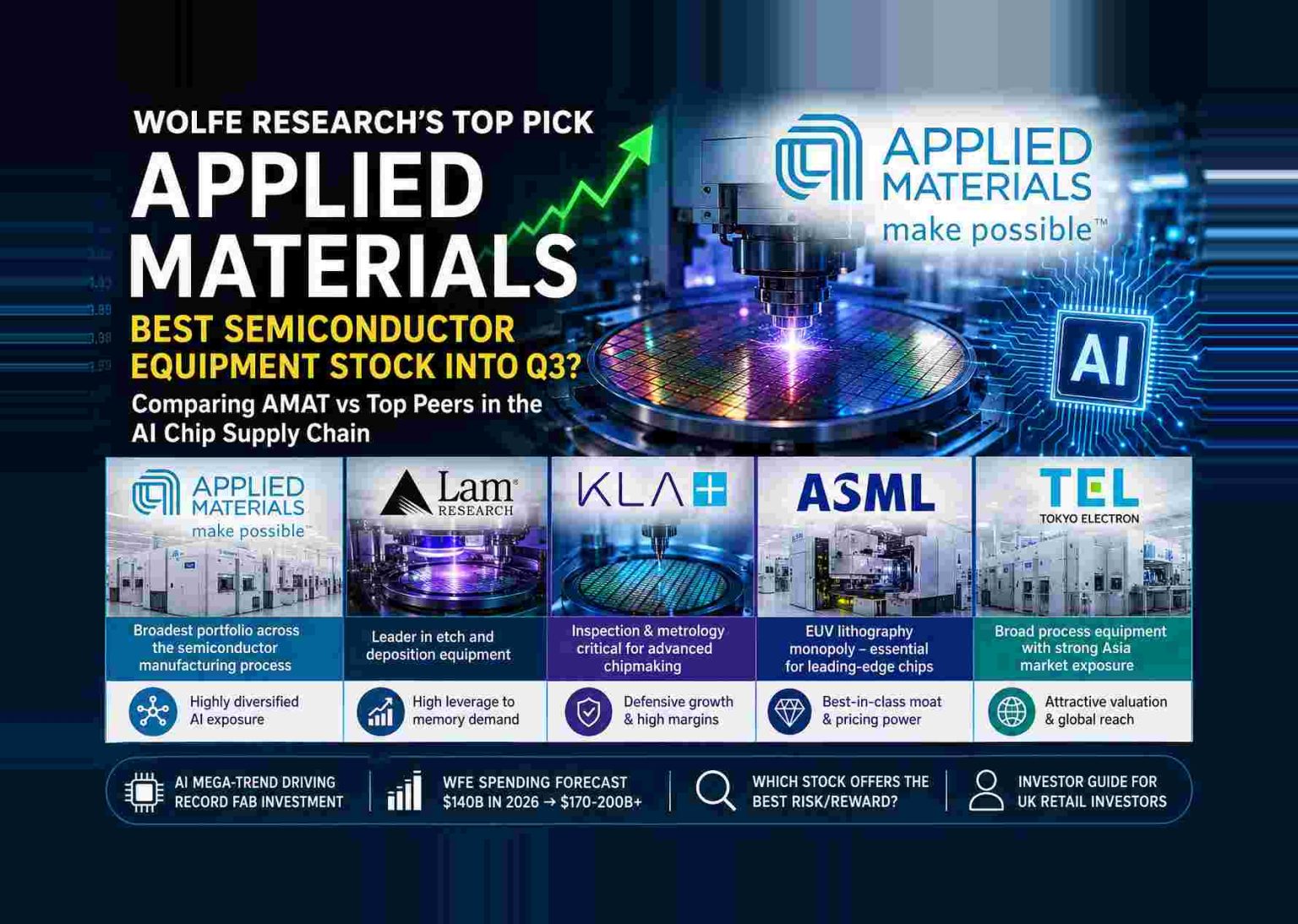
Wolfe Research has reportedly named Applied Materials (NASDAQ:AMAT) its preferred semiconductor capital equipment (SCE) stock ahead of the upcoming earnings season. It is an understandable call given Applied Materials is well supported by industry fundamentals, but UK retail investors should recognise that the sector offers several high-quality alternatives, each with different risk/reward characteristics. The AI investment boom is no longer just about buying chip designers like Nvidia (NASDAQ:NVDA). Every advanced AI processor must first be manufactured in a semiconductor fabrication plant (‘fab’), and those fabs cannot operate without equipment supplied by companies such as Applied Materials, ASML (AMS:ASML), Lam Research…
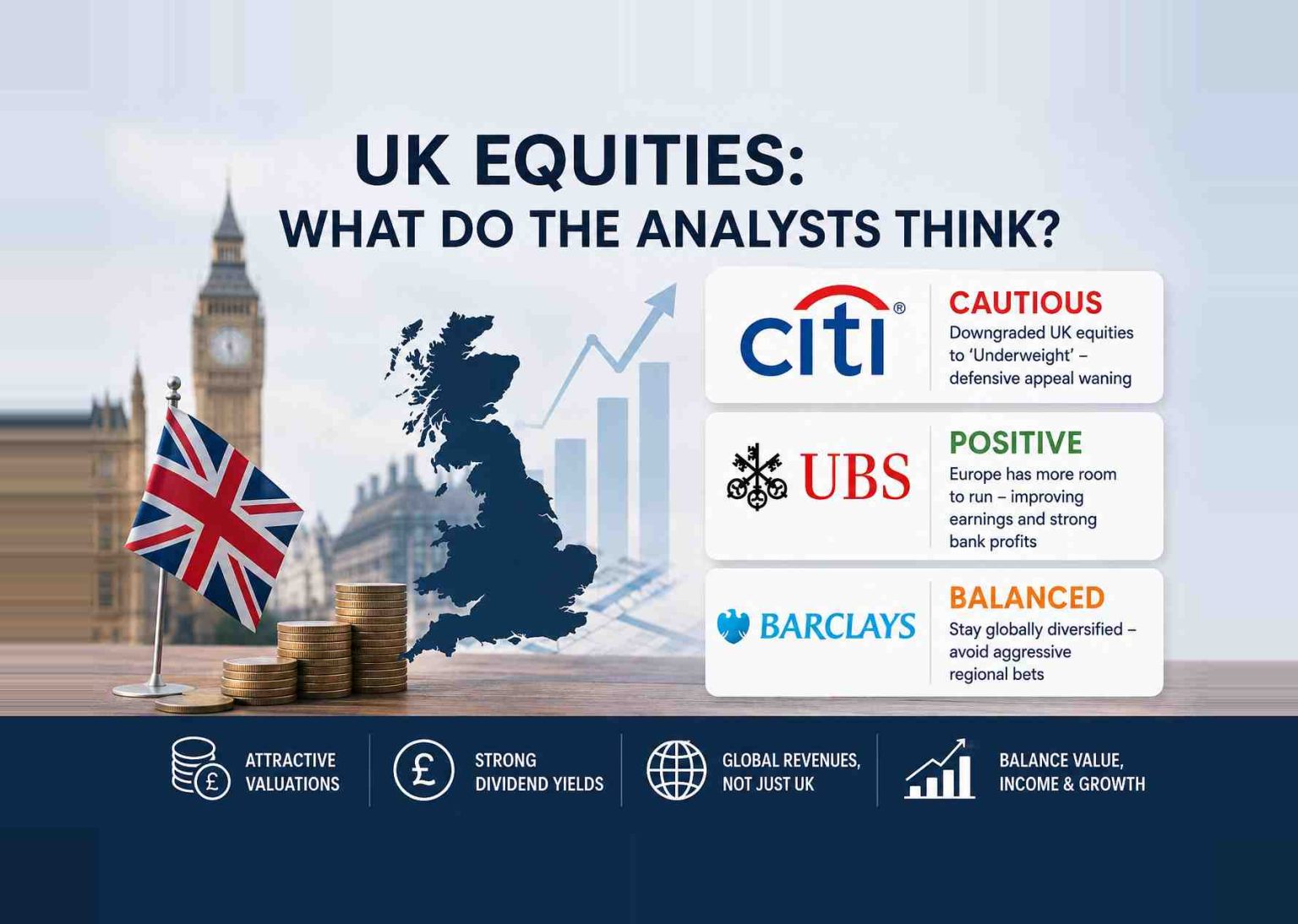
Citi has downgraded UK equities from ‘overweight’ to ‘underweight’, arguing that the FTSE’s traditional strengths have become less compelling as global market leadership broadens beyond defensive sectors. The move marks a notable shift from one of the investment banks that had previously been constructive on the UK market. Citi’s central argument is that the investment backdrop has changed. Earlier in 2026, UK shares benefited from their heavy exposure to defensive industries such as pharmaceuticals, consumer staples, oil majors and mining companies. Investors also viewed the FTSE 100 as something of a geopolitical safe haven during heightened tensions in the Middle…
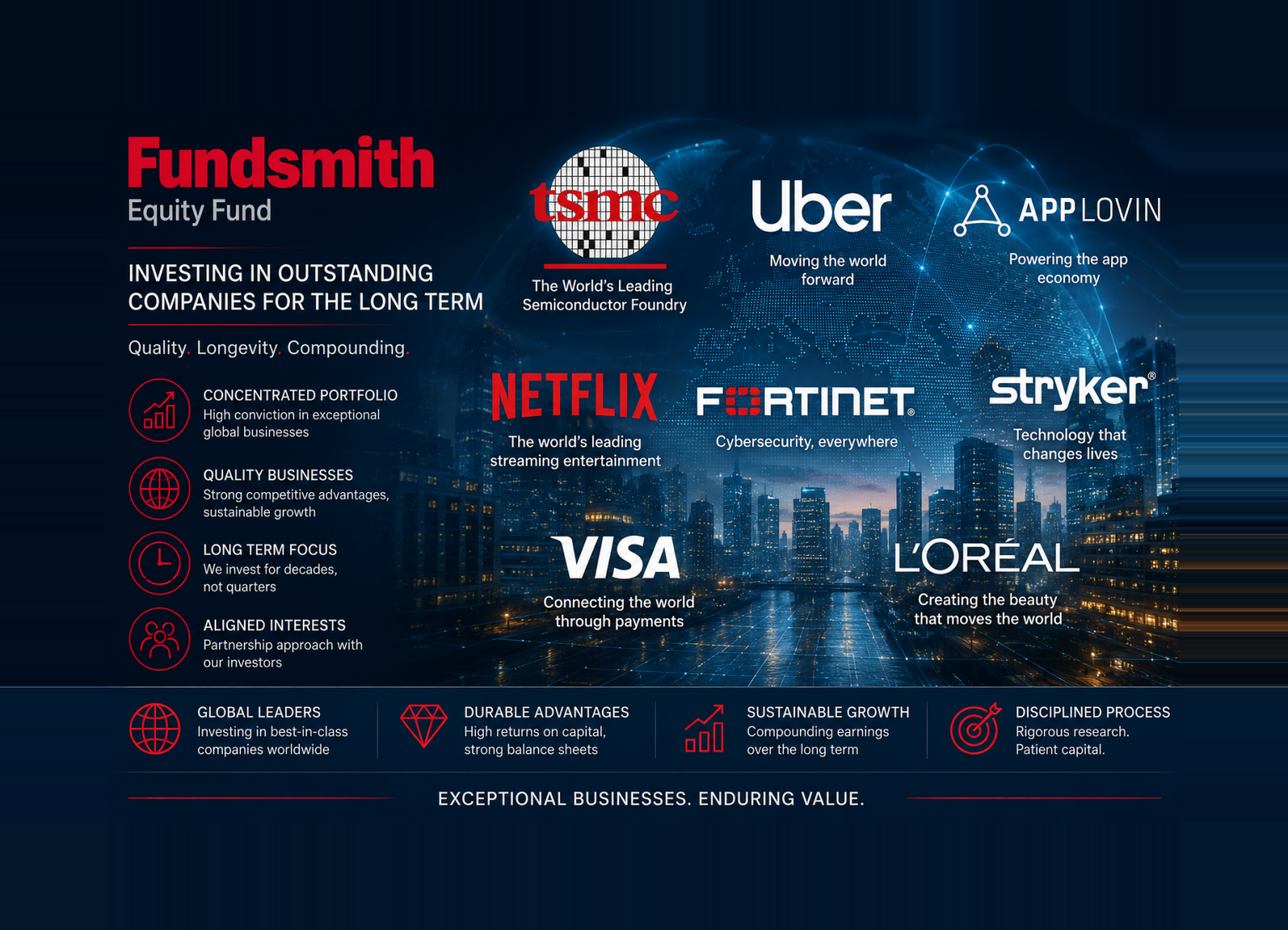
The 1 July 2026 semi-annual shareholder letter from Fundsmith Equity marks the biggest change in the fund’s investment process since its launch in 2010. Founder and lead manager Terry Smith acknowledges that the market environment has shifted materially and outlines a significant overhaul designed to improve returns after several years of lagging global equity markets. The key messages for UK retail investors are: Fundsmith letter to shareholders, July 2026 Fundsmith Factsheet Performance has become increasingly challenging Fundsmith enjoyed one of the strongest long-term records in UK retail investing during its first decade. However, recent years have been much more difficult.…

FTSE 100 tech specialist trust Polar Capital Technology Trust (LON:PCT) delivered another exceptionally strong year to 30 April 2026, comfortably outperforming global equity markets as artificial intelligence (AI), semiconductor and cloud infrastructure spending continued to accelerate. The hugely popular trust remains one of the strongest ways to access global AI and technology through the London market. Although the trust’s shares produced excellent returns, they still trade at a meaningful discount to net asset value (NAV), leaving investors with exposure to one of the strongest long-term technology portfolios at less than the value of its underlying assets. Polar Capital Technology Trust…

Arista Networks (NYSE:ANET) closed at a record $181.05 on 9 July 2026, extending a remarkable multi-year rally as investors continue to favour companies supplying the infrastructure powering artificial intelligence. Rather than building AI models itself, Arista provides the ultra-high-speed networking equipment that connects tens of thousands of GPUs inside hyperscale AI data centres, making it one of the clearest ‘picks-and-shovels’ beneficiaries of the AI investment boom. Arista Networks investor relations Arista Networks (NYSE:ANET)Price: $181.05 (+35% YTD)Market cap: ~$228m What does Arista Networks do? Arista designs and sells: Its biggest customers include hyperscalers such as Microsoft (NASDAQ:MSFT), Meta Platforms (NASDAQ:META), Alphabet…

A number of investment trusts are still trading at discounts exceeding 20%, offering potentially attractive opportunities if sentiment improves. After several difficult years for the investment trust sector, discounts have begun to narrow. The average UK investment trust now trades on a 9.6% discount to net asset value (NAV), the narrowest level since 2022, helped by lower interest rate expectations, mergers, buybacks and activist pressure. However, Investment trustApprox. NAV discountAIC sector averageDividend yieldHarbourVest Global Private Equity~22.5%Private Equity ~26%NilPantheon International~25%*Private Equity ~26%NilChrysalis Investments~44%**Growth Capital ~+13.8%Nil All share prices 9 July 2026. *NAV 31 May 2026. **NAV at 31 March 2026. Why…

The latest trading updates from 9 July 2026 reinforced that both Computacenter (LON:CCC) and Bytes Technology (LON:BYIT) continue to benefit from long-term digital transformation and AI infrastructure spending. Because both companies remain among the highest-quality technology businesses on the UK market. However, while both companies remain well positioned, the market’s reaction highlighted the different stages of their growth stories. Computacenter delivered another confident trading statement, building on its exceptionally strong first quarter, while Bytes Technology reassured investors at its AGM that demand remains healthy despite a more measured spending environment among some customers. Basically, investors viewed both updates positively, with…