




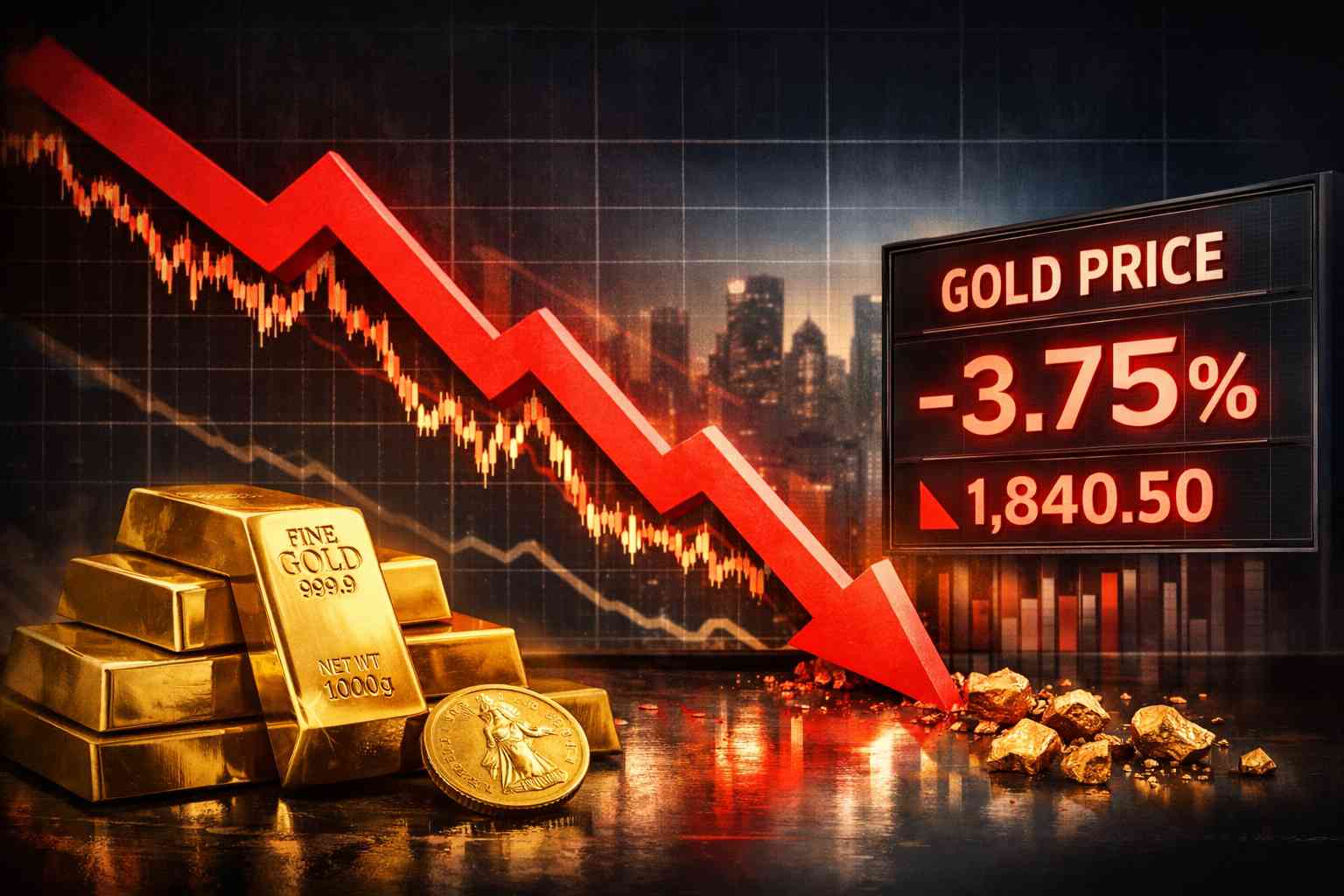
Gold has lost nearly $1,000/oz (per ounce) in less than a month as conflict rages in the Middle East, leaving many investors confused. For years, gold has been the ultimate safe haven for investors during extreme global events.
In the early months of the Covid pandemic, it shot-up around 35%, and more than doubled during the great financial crisis of 2009/2010. Now, as geopolitics again creates turmoil for nations, economies and financial markets, why is the price of gold plunging?
Brutal correction
Gold prices continued their sharp decline in trading on Tuesday, marking a 10th straight session of losses as conflicting geopolitical narratives from Washington and Tehran injected fresh uncertainty into global markets.
Spot gold fell 0.7% to $4,376.04/oz, while US gold futures slipped 0.6% to $4,413.59/oz. The metal had already sunk to a four‑month low during Monday’s session before trimming part of its intraday decline to close 2% lower. Other metals have also come under pressure.
Source: Copilot
President Donald Trump said Monday that the US had postponed planned strikes on Iran’s electricity grid, citing what he described as ‘very good and productive’ discussions with unnamed Iranian officials.
That assertion briefly eased broader market tensions and triggered a pullback in crude oil — a move that helped gold stabilize into the close of the previous session.
However, Iran’s Parliament Speaker Mohammad Baqer Qalibaf publicly denied that such talks occurred, reigniting uncertainty about Washington–Tehran communications. The regional backdrop grew more tense after Israel confirmed multiple waves of Iranian missile attacks overnight, signalling no imminent de‑escalation.
What’s really hurting gold
Conflict in the Middle East has seen oil prices spike as supply lines shutdown, sparking worldwide inflation fears. Since the conflict escalated in late February, Brent crude and WTI prices have soared 50% to over $100/bbl (per barrel), easing modestly below that headline level in recent trading sessions.
Gold’s slide has been compounded by rising expectations that global central banks — particularly the US Federal Reserve — may delay anticipated interest rate cuts to combat inflationary pressures from energy price spikes.
Higher interest rates weigh on gold because the precious metal offers no income, or yield. Government bonds, such as US Treasuries or UK Gilts do, making them relatively more attractive to gold as investors chase low risk assets. This complex dynamic has also driven a significant strengthening of the dollar, adding to the downward pressure on gold prices.
The £27.8 billion iShares Physical Gold ETC (SGLN), Britain’s biggest gold passive fund, has lost around 13% this month, wiping out all of the gains made earlier in 2026.
Where next for gold
With geopolitical tensions escalating yet failing to reverse gold’s downward trend, investor attention remains squarely on upcoming economic data and central‑bank commentary. If inflation indicators remain firm or the dollar continues to strengthen, gold may face additional pressure despite heightened geopolitical risk.
This month, analysts at long-time gold bull Yardeni Research tapered their end 2026 gold price projection from $6,000/oz to $5,000/oz. That rethink was a direct reaction to the increased uncertainty around the US/Iran conflict and its impact on the global economy in the weeks ahead.
Interestingly, Yardeni Research have resisted the temptation to tone down their longer-run gold forecast. They believe gold prices could hit $10,000 by the end of the decade, but much rests on how quickly the current clash can be settled.
You might also like: