



Raspberry Pi (LON:RPI) shares saw a surge of investor buying on Thursday as demand for industrial computing, AI-enabled devices and embedded technology reshapes the company’s growth outlook.
For UK retail investors, the key question is whether today’s share price strength reflects a temporary trading improvement or a more durable change in Raspberry Pi’s earnings potential.
Raspberry Pi investor relations
| Raspberry Pi (LON:RPI) | Price: £714 (+13%) | Market cap: £1.39bn |
Record first-half results provide the catalyst
The immediate catalyst is a substantial improvement in Raspberry Pi’s financial performance.
According to the company’s 24 September results, H12026 revenue increased 90% to $256.9m, while adjusted EBITDA more than doubled to $40.3m. Profit before tax rose 216% to $19.6m.
| Raspberry Pi H1 2026 | reported |
| Revenue | $256.9m |
| Revenue growth | +90% |
| Adjusted EBITDA | $40.3m |
| Profit before tax | $19.6m |
| PBT growth | +216% |
| Unit shipments | 4.2m |
| Order backlog | 2.6m units |
The combination of accelerating sales, stronger profitability and improved order visibility helps explain why investors are reassessing the company’s growth trajectory.
Tracking progress
When we looked at the stock in June, we told investors to watch these key indicators over the next 12 months:
- Semiconductor revenue growth.
- AI product adoption.
- Industrial customer wins.
- Gross margin progression.
- DRAM pricing trends.
- Further earnings upgrades.
What we learned today
There were several key takeaways for UK investors from today’s H1 earnings.
1. OEM adoption is becoming an important growth engine
Raspberry Pi is moving beyond its traditional enthusiast and education customer base into embedded industrial computing.
Direct shipments, excluding licensees, increased 26% to 3.4 million units during the first half. The order backlog doubled to 2.6 million units, with particularly strong demand from smart-home and aerospace and defence customers.
This matters because OEM design wins can generate repeat orders when Raspberry Pi technology becomes embedded in a customer’s finished product.
The company’s existing customer base is already substantial:
| OEM opportunity | Latest disclosed information |
| Active OEM relationships | 1,300+ |
| Global resellers | 100+ |
| Markets served by resellers | 75 countries |
| Long-term growth opportunity | Industrial and embedded computing |
Investor implication: OEM adoption could make revenue less dependent on individual product launches and consumer enthusiasm.
2. Semiconductor revenue becoming second growth lever
One of the most important structural developments is Raspberry Pi’s semiconductor business.
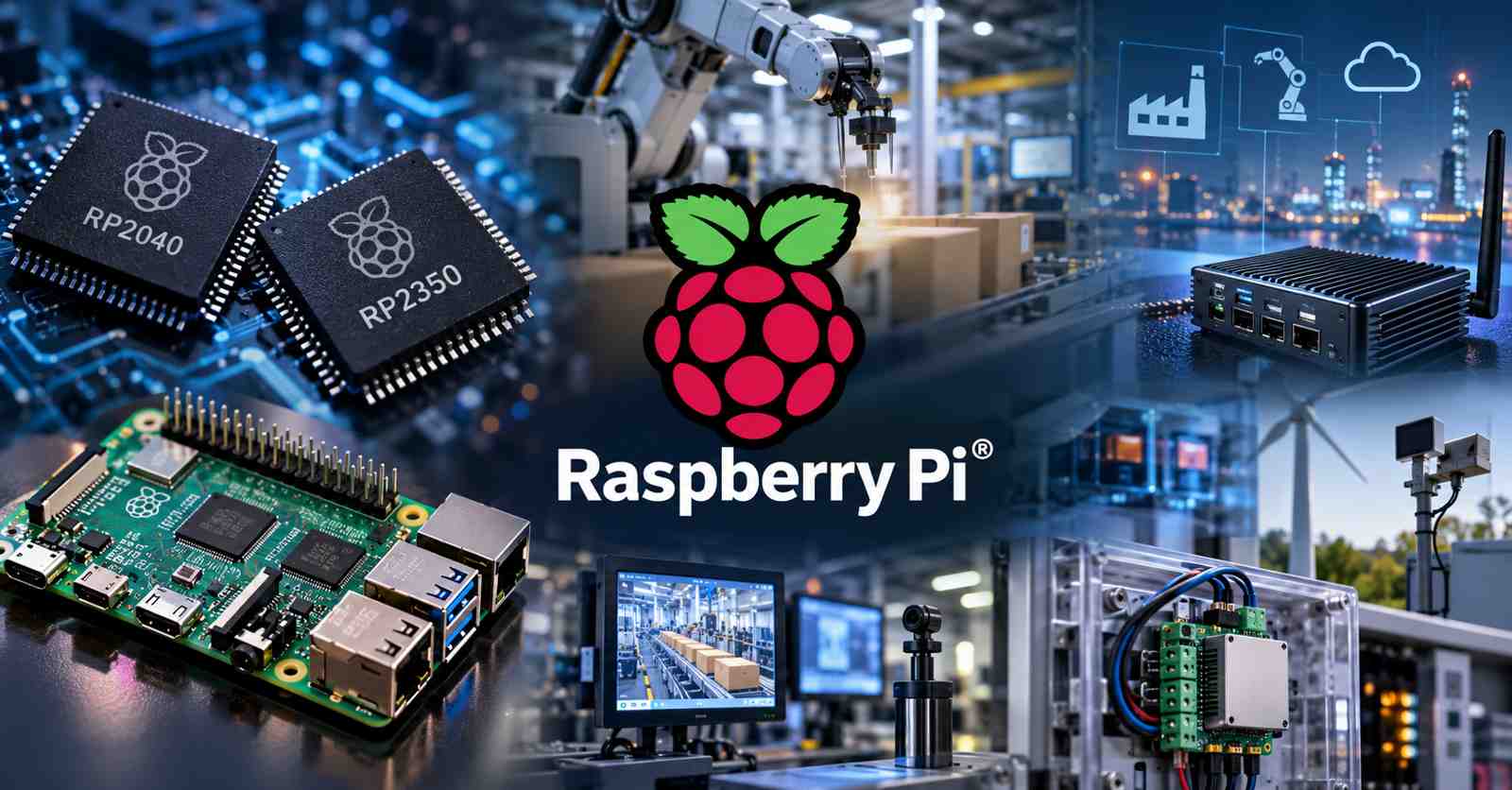
Its RP2040 and RP2350 microcontrollers allow customers to integrate Raspberry Pi technology directly into their own products rather than purchasing complete computer boards.
Management said in its FY2025 results that semiconductor device volumes had exceeded those of boards and modules for the first time. The company aims to expand semiconductor shipments significantly over time.
This creates a potentially attractive model:
- Boards and modules introduce customers to Raspberry Pi technology.
- Semiconductor products allow OEMs to develop customised designs.
- Successful designs can generate repeat chip demand across product lifecycles.
For investors, the semiconductor opportunity could eventually provide a broader revenue base and increase the value of Raspberry Pi’s intellectual property.
3. AI adoption is extending beyond datacentres
Raspberry Pi is not competing directly with Nvidia (NASDAQ:NVDA) in high-performance AI accelerators. Its opportunity lies in edge AI—processing data closer to where it is generated.
Potential applications include:
- Industrial machine vision.
- Smart-home devices.
- Robotics and automation.
- Intelligent monitoring systems.
- Embedded systems requiring local processing.
CEO Eben Upton recently told the Financial Times that the need for AI at the edge of computer networks could increase substantially. He suggested the transition toward efficient AI models running on conventional CPUs might happen faster than previously expected.
That is strategically relevant because Raspberry Pi offers low-cost, adaptable computing platforms that can be integrated into industrial equipment.
How to invest in technology stocks: A UK beginner’s guide 2026
However, investors should distinguish between AI-related demand and AI revenue. The company benefits from customers building AI-enabled products, but that does not mean Raspberry Pi captures the economics of the broader AI infrastructure market.
4. Gross margins: strong profits, but memory costs a risk
Gross profit increased 79% to $59.4m in the first half. However, gross margin narrowed from 25% to 23%, while gross profit per board increased 53% to $12.20.
| Profitability measure | H1 2026 |
| Gross profit | $59.4m |
| Gross profit growth | +79% |
| Gross margin | 23% |
| Gross profit per board | $12.20 |
| Adjusted EBITDA | $40.3m |
The margin decline highlights an important issue: Raspberry Pi’s growth is occurring during a period of elevated memory costs.
How crazy could the memory chip shortage become – and what does it mean for UK investors?
Management previously said that strategic inventory purchases helped protect availability and profitability despite rising DRAM prices.
DRAM pricing: a double-edged sword
| DRAM trend | Potential impact |
| Prices remain elevated | Pressure on hardware margins |
| Strategic inventory | Temporary protection from cost inflation |
| Improved supply availability | Potential margin recovery |
| Strong demand despite higher prices | Evidence of customer resilience |
The risk is that memory inflation eventually forces Raspberry Pi to raise prices or absorb higher costs.
5. Earnings upgrades and analyst expectations
The company said full-year adjusted EBITDA is now expected to exceed market consensus following its record H1 performance.
The latest company-hosted analyst consensus, updated 1 September, showed:
| Metric | FY2026 consensus | FY2027 consensus |
| Gross profit | $93.0m | $95.0m |
| Gross margin | 15.2% | 13.7% |
| Adjusted EBITDA | $57.8m | $56.8m |
*Estimates taken 1 September 2026 from three analysts and should not automatically be treated as current post-results forecasts.
Analyst commentary has also highlighted the competing forces of growth potential and memory-cost pressure. Berenberg previously initiated coverage with a Hold rating and a 670p price target, citing customer fragmentation and high memory prices. Deutsche Bank subsequently raised its target to 650p while retaining Hold.
Bull case vs bear case
🐂 Bull case
What could drive further upside?
- OEM design wins translate into recurring orders.
- Semiconductor shipments scale significantly.
- Edge AI adoption accelerates.
- Memory costs stabilise, supporting gross-margin recovery.
- Earnings upgrades continue as backlog converts into revenue.
🐻 Bear case
What could undermine the rally?
- DRAM inflation erodes profitability.
- Backlog conversion disappoints.
- OEM customers delay product launches.
- Valuation already discounts substantial future growth.
- AI enthusiasm fails to translate into meaningful incremental revenue.
Sharesify investor verdict
Raspberry Pi’s latest results reshape the company’s growth outlook and strengthen the case that it is evolving from a specialist computer-board manufacturer into a broader industrial computing and semiconductor business.
For UK retail investors, the most important indicators to monitor next are OEM order conversion, semiconductor growth, gross-margin progression and whether earnings upgrades justify the share price.
The opportunity is compelling in terms of business development, but investors should remember that strong operational growth does not automatically make a stock attractively valued. According to Stockopedia data, based on yesterday’s close, the stocks is trading on a 12m rolling PE of +50x.
You might also like: