If you are new to investing in the UK, one of the first terms you are likely to come across is the Stocks and Shares ISA. It is often described as one of the most tax‑efficient ways to invest, but for beginners it can feel confusing or intimidating. This guide explains what a Stocks and Shares ISA is, how it works, and why people use one, in clear and simple terms.
What does ‘ISA’ mean?
ISA stands for Individual Savings Account. It is a type of account created by the UK government to encourage people to save and invest by offering valuable tax advantages.
There are several types of ISA, including Cash ISAs and Lifetime ISAs, but Stocks and Shares ISAs are designed for investing in financial markets rather than holding cash in a savings account.
The most important thing to know is this:
Any money you earn inside an ISA is free from UK tax
Sharesify
What makes them different from a normal investment account?
You can invest in shares or funds without using an ISA, but outside an ISA you may have to pay:
- Capital gains tax when investments rise in value and are sold (any gains beyond £3,000 in 2026/27)
- Income tax on dividends (20% normal, 40% higher, 45% additional rate)
- Additional admin such as reporting gains to HMRC
A Stocks and Shares ISA protects you from all of these. Inside the ISA:
- Growth is tax‑free
- Dividends are tax‑free
- Withdrawals are tax‑free
This makes ISAs especially valuable for long‑term investors.
What can you invest in?
A Stocks and Shares ISA is simply a tax wrapper—it holds investments, but it is not an investment itself. Inside the ISA you can usually invest in things like:
- Shares in individual companies
- Funds, which pool money across many investments
- Exchange‑traded funds (ETFs) that track markets or themes
- Investment trusts, another type of fund
- Bonds (loans to governments or companies)
Beginners often start with diversified funds rather than individual shares, as this spreads risk across many companies rather than relying on the performance of one.
How the ISA allowance works
Each tax year, the government sets an ISA allowance. This is the maximum amount you can put into ISAs in a single year and is currently set at £20,000 (2026/27).
- The allowance applies across all ISA types combined
- You can put the full amount into a Stocks and Shares ISA if you wish
- Any unused allowance is lost at the end of the tax year
Only new contributions count towards the limit. Investment growth does not
Sharesify
How you put money into a Stocks and Shares ISA
Money going into an ISA must come from already taxed income. For example, money from your salary or savings.
You can usually invest by:
- Making a lump‑sum contribution
- Setting up monthly payments
- Doing both
Once the money is inside the ISA, you choose how it is invested. Many platforms (Hargreaves Lansdown, AJ Bell, Interactive Investor, Vanguard etc) offer pre‑built portfolios or ‘ready‑made’ options for beginners who do not want to pick investments themselves.
Which! guide to investment platform fees and charges
Can you take money out?
YES. One of the biggest advantages of a Stocks and Shares ISA is flexibility.
- You can usually withdraw money at any time
- Withdrawals are not taxed
- There are no age restrictions
However, investing involves risk. The value of your investments can go up or down, so withdrawing money when markets are down could result in getting back less than you invested. Stocks and Shares ISAs are therefore better suited to medium‑ and long‑term goals, typically five years or more.
Risk: what beginners should know
All investing involves risk, and Stocks and Shares ISAs are no exception.
Key risks include:
- Market ups and downs: prices fluctuate daily
- Short‑term losses: values can fall, especially over short periods
- No guaranteed returns: unlike cash savings
However, history shows that markets have tended to grow over long periods. By staying invested, spreading risk through diversification, and avoiding panic decisions, many investors improve their chances of positive returns.
A common beginner rule of thumb is:
Invest only money you will not need in the near future
Beginner rule of thumb
Fees and charges
ISA providers usually charge fees, which may include:
- Platform or account fees
- Fund management fees
- Trading charges for buying or selling investments
Fees can reduce returns over time, so beginners should pay attention to them and keep things simple where possible.
Who are Stocks and Shares ISAs suitable for?
They may be suitable if you:
- Want to invest for long‑term growth
- Are happy to accept ups and downs in value
- Want to prevent inflation eroding your long-term wealth
- Want flexibility to access money in the future
- Do not want to deal with tax paperwork
They may be less suitable if you:
- Need the money within a short time
- Cannot tolerate fluctuations in value
- Are looking for guaranteed returns
Stocks and Shares ISAs vs cash savings
Many beginners are used to cash savings accounts. The key difference is this:
- Cash savings prioritise stability
- Stocks and Shares ISAs prioritise growth over time
Cash is useful for emergencies and short‑term goals. Stocks and Shares ISAs are better suited to growing wealth over many years, such as planning for retirement.
Final thoughts
A Stocks and Shares ISA is one of the most powerful tools available to UK investors. It lets you invest in global markets while keeping all gains and income free from UK tax. For beginners, the key is understanding that ISAs are about long‑term investing, NOT quick wins.
Starting small, investing regularly, keeping costs low, and staying patient are often more important than choosing the perfect investment. Over time, a Stocks and Shares ISA can play a central role in building financial security and long‑term wealth.
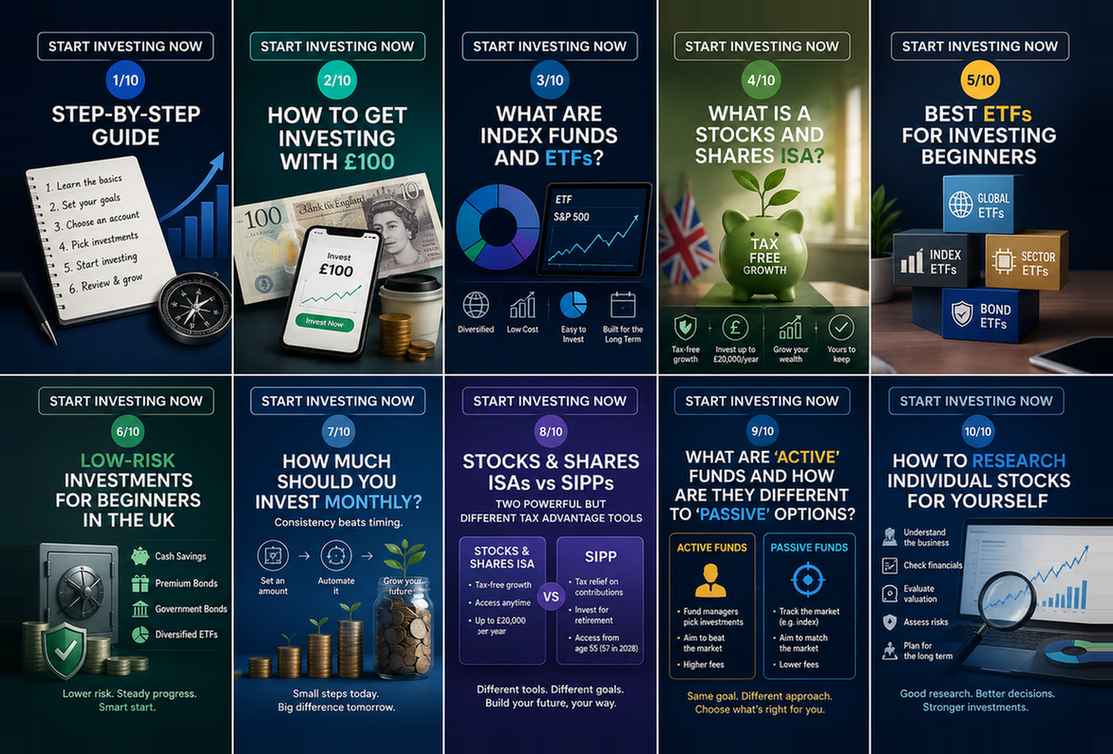
Want to learn more? Read the next part of Sharesify’s 10-part ‘Start investing now’ simple guide… ‘ – Best ETFs for Investing Beginners’
You might also like: