



If you’re new to investing, ETFs (or exchange-traded funds) are one of the easiest and safest ways to get started. Instead of picking individual stocks (which is higher-risk and overwhelming), ETFs let you invest in hundreds or thousands of companies at once—in a single purchase.
This guide will show you the best beginner-friendly ETFs in the UK and how to build a simple portfolio in 2026.
🧭 What is an ETF (simple explanation)
An ETF (Exchange-Traded Fund) is basically a basket of investments. Instead of buying one company, you buy a fund that might include:
- Apple
- Ferrari
- Nike
- Shell
- Lloyds
- Samsung
- BYD
- Rolls-Royce
- Thousands of other companies globally
So, if one company performs badly, others can balance it out.
👉 That’s why beginners love ETFs—they reduce risk without needing expert knowledge.
💡 Why ETFs are perfect for beginners
ETFs are popular with UK beginners because they:
✔️ Are highly diversified
✔️ Require no stock-picking skills
✔️ Have low fees
✔️ Are easy to buy via apps
✔️ Work well for long-term investing
In short: 👉 ETFs let you invest like a professional without being one.
🥇 Best all-in-one ETF for beginners (UK)
🌍 Global equity ETF (core holding)
This is the most important ETF for beginners. It tracks thousands of companies across developed and emerging markets.
Why it’s the best starting point:
- Instant global diversification
- Long-term historical growth
- Low maintenance
- Works for any beginner portfolio
👉 If you only buy ONE ETF, it should be a global one.
Example beginner-friendly options:
- Vanguard FTSE Global All Cap style ETFs
- MSCI World index ETFs
👉 These cover most of the global economy in one investment.
🥈 Simple 2-ETF beginner portfolio
If you want slightly more control, this is a popular structure:
1. Global ETF (80%–100%)
Core long-term growth engine
2. Optional extra ETF (0%–20%)
For example:
- Emerging markets ETF
- UK market ETF
👉 This adds slight diversification without complexity.
🧠 Simple 3-ETF beginner portfolio (slightly advanced)
If you want more structure:
1. Global ETF (70%–80%)
Main foundation
2. US-focused ETF (10%–20%)
Exposure to major US companies
3. Bonds ETF (10%–20%)
Adds stability during market downturns
👉 But for most beginners, 1 ETF is enough
📊 Best ETF strategy for beginners in 2026
Here’s the simplest proven approach:
✔️ 1: Pick 1 global ETF
✔️ 2: Invest regularly (monthly)
✔️ 3: Hold for 10+ years
✔️ 4: Ignore short-term noise
That’s it.
⚖️ Risk explained simply
ETFs reduce risk, but they are not risk-free. You should expect:
📉 Short-term drops (normal)
📈 Long-term growth (historically likely)
🔁 Volatility during economic events (Global Financial Crisis, Covid, Russia invasion of Ukraine etc)
👉 The key rule: only invest money you won’t need for at least 5–10 years.
💰 How much should beginners invest?
You don’t need much to start.
Common UK beginner amounts:
- £25/month
- £50/month
- £100/month
👉 Even small monthly investing can build serious long-term wealth.
📱 Where to buy ETFs in the UK
You can buy ETFs through beginner-friendly apps like:
- Vanguard is a primary choice for buying low-cost passive index funds
- Hargreaves Lansdown (largest provider by market share)
- AJ Bell is recommended for comprehensive investment options
- Interactive Investor is often cited for its flat monthly fee structure, making it cost-effective for larger portfolios
- Freetrade (also low cost/no commission, plus fractional shares
- eToro (more social/trading-focused)
- Trading 212 (low cost/no commission)
Once inside these apps, search for the ETF name and buy it like a stock.
Read the Which! guide to investing platforms
🧩 Example beginner ETF setup (simple & realistic)
If you’re starting today:
Account: Stocks and Shares ISA
App: Beginners should probably stock with one of the top names above
ETF: Global index ETF
Investment: £100 initial + £50/month
👉 This is a complete beginner portfolio.
🚫 Common ETF mistakes beginners make
❌ Owning too many ETFs
More is not necessarily better—simplicity often wins.
❌ Frequently selling one and buying another ETF
This reduces long-term returns.
❌ Trying to ‘beat the market’
Most beginners underperform when they try this.
❌ Panic selling during dips
Markets always recover over time.
🧠 Key takeaway
You don’t need:
- 10 different ETFs
- Complex strategies
- Market timing skills
You just need: 👉 1 good global ETF + consistency + time
🚀 What to do next
Once you choose your ETF:
- Open a Stocks and Shares ISA in a platform app
- Buy your first ETF
- Set up monthly investing plan
- Stay consistent for years
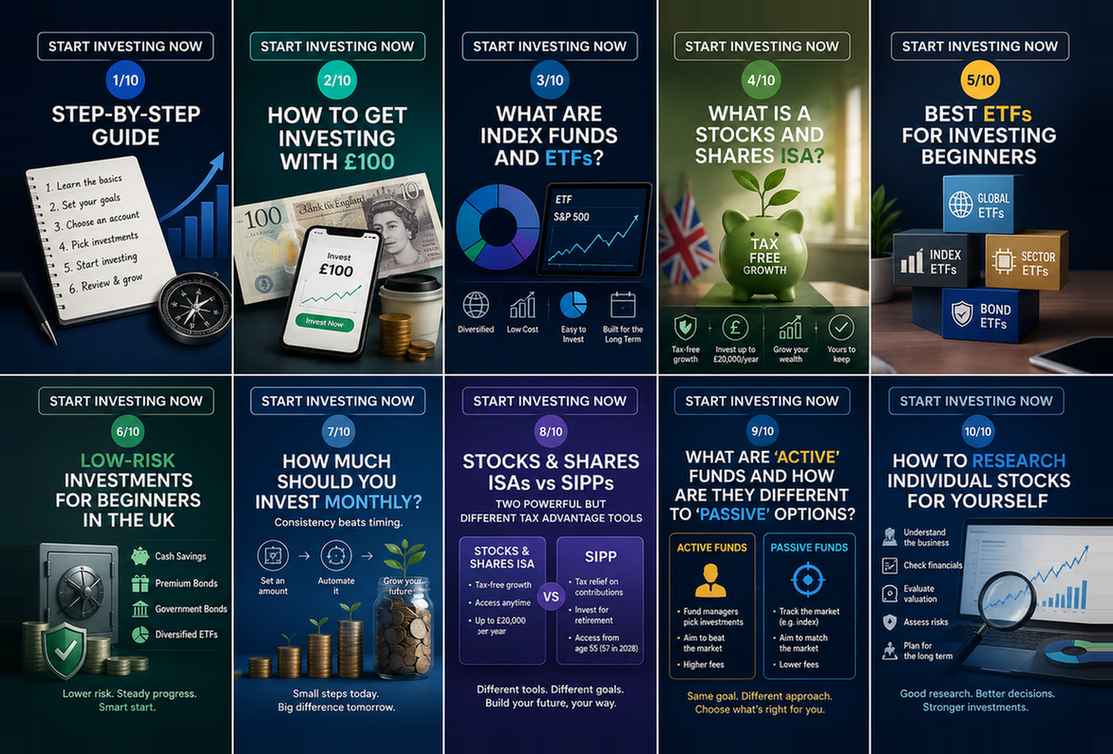
Want to learn more? Read the next part of Sharesify’s 10-part ‘Start investing now’ simple guide… ‘ – Low risk options for investing beginners’…
You might also like: