




Author: Steven Frazer

Steven Frazer
Steven Frazer has worked in the investment space for nearly 30 years and was Shares magazine's (owned by AJ Bell) technology word basher and analyst for close on 15 years, covering all the major tech developments right back to the dot com boom and bust (AI, cloud computing, cybersecurity, robotics, digital commerce and more). He is a Spurs obsessive, ska junkie and loves a good book about physics. Winner of the 2013 UKTech journalist of the year gong and a TytoPR #Tech500 influencer in 2018 & 2019. Find him at LinkedIn: Click Here
Shares in Alphabet (NASDAQ:GOOG) rallied 5% on 29 June after the technology giant officially joined the Dow Jones Industrial Average, replacing Verizon Communications (NYSE:VZ). The move marks another milestone in the AI investment boom and has renewed interest in the stock following its recent pullback. For UK retail investors, the inclusion is important for three reasons: automatic buying by passive funds, increased visibility among institutional investors, and renewed attention on Alphabet’s AI growth story. Alphabet (NASDAQ:GOOG)Price: $351.28Market cap: $4.29tn Why joining the Dow matters The Dow Jones Industrial Average is one of the world’s most widely followed stock indices. Although…

The UK’s biggest listed investment trusts span very different asset classes. Together they offer exposure to private equity, global growth stocks, activist investing, technology, logistics property and diversified global equities. That diversity means there is no single ‘best’ trust—each suits a different type of investor. At one end of the spectrum is 3i Group (LON:III), whose strategy centres on long-term private equity investing in high-quality European businesses. F&C Investment Trust (LON:FCIT) represents perhaps the most traditional approach, while investors seeking income rather than maximum capital growth, Tritax Big Box REIT (LON:BBOX) offers exposure to one of the UK’s fastest-growing segments…
After years of market leadership, all three companies – Meta Platforms (NASDAQ:META), Microsoft (NASDAQ:MSFT), Palantir Technologies (NASDAQ:PLTR) – have suffered sharp corrections in 2026, albeit for different reasons. Rather than signalling deteriorating businesses, the sell-off has largely reflected investors reassessing valuations, or valuation compression rather than deteriorating fundamentals, as they balance the enormous cost of AI infrastructure and the pace at which AI investments will generate returns. Copper: The overlooked AI investment theme for UK retail investors Meta Platforms (NASDAQ:META)Price: $542.87 (-16.5% YTD)Market cap: $1.38tnMicrosoft (NASDAQ:MSFT)Price: $352.83 (-25.4% YTD)Market cap: $2.62tnPalantir Technologies (NASDAQ:PLTR)Price: $107.27 (-36.1% YTD)Market cap: $257.16bn For UK…
Every AI model ultimately runs inside a power-hungry datacentre, and every datacentre requires vast quantities of copper. So while investors thinking about artificial intelligence will usually focus on chipmakers, such as Nvidia (NASDAQ:NVDA), Broadcom (NASDAQ:AVGO), Micron Technology (NASDAQ:MU), or cloud hyperscale providers, like Microsoft (NASDAQ:MSFT), Amazon (NASDAQ:AMZN) or Alphabet (NASDAQ:GOOG), copper seldom gets a look in. Yet increasingly numbers of analysts view copper as the ‘physical backbone’ of the AI revolution. While software captures headlines, copper powers the servers, cooling systems, substations, transformers and transmission networks needed to make AI work. Micron earnings crush expectations as AI memory boom accelerates…
Shares in Micron Technology (NASDAQ:MU) surged in after-hours trading after the US memory-chip giant delivered another blockbuster quarter, reinforcing the view that memory has become one of the most important beneficiaries of the artificial intelligence investment cycle. The results were closely watched by investors as a key test of whether spending on AI infrastructure and data centres remains robust. For UK investors, Micron remains one of the purest listed ways to gain exposure to AI memory demand, particularly through high-bandwidth memory (HBM) chips used alongside AI accelerators from companies such as Nvidia. Micron Q3 2026 release Micron Q3 2026 slides…

For UK retail investors, one of the most striking features of the AI boom is that many of the biggest winners—such as Nvidia (NASDAQ:NVDA), Microsoft (NASDAQ:MSFT), Broadcom (NASDAQ:AVGO) and Palantir Technologies (NASDAQ:PLTR)—are listed in the US rather than London. The UK has world-class AI research and a thriving start-up ecosystem, but relatively few large, listed AI companies. Instead, investors often gain exposure through software, data, semiconductor materials, digital infrastructure and power providers rather than pure-play AI developers. Why London has few pure AI stocks 1. The UK specialises in AI creation, not AI commercialisation Britain has produced leading AI companies,…

The short answer is no merger has been announced, but the probability of one occurring in 2027 is being taken increasingly seriously by investors and analysts. The most likely outcome today is continued speculation rather than an imminent transaction. Over the past month, reports from CNBC, Bloomberg, Reuters Breakingviews, Barron’s and Fortune have suggested that Elon Musk and advisers have discussed combining SpaceX and Tesla following SpaceX’s IPO. Several analysts now openly model a future merger as a realistic scenario rather than a fringe idea. The speculation intensified after: Tesla investors relations SpaceX investor relations Analyst views Analyst / SourceViewWedbush…

Finding an active fund that beats its benchmark over one market cycle is difficult. Finding one that does so across 3-, 5- and 10-year periods, while maintaining a long track record, sizeable assets* and reasonable fees, is exceptionally rare. Trustnet’s latest analysis found only 24 UK equity funds delivering top-quartile returns across all standard investment periods, highlighting how few managers consistently add value after fees. The UK funds outperforming over all standard timeframes For long-term investors, the most attractive candidates tend to share several characteristics: * WS Guinness Global Innovators has less than £100m in assets but include it because…
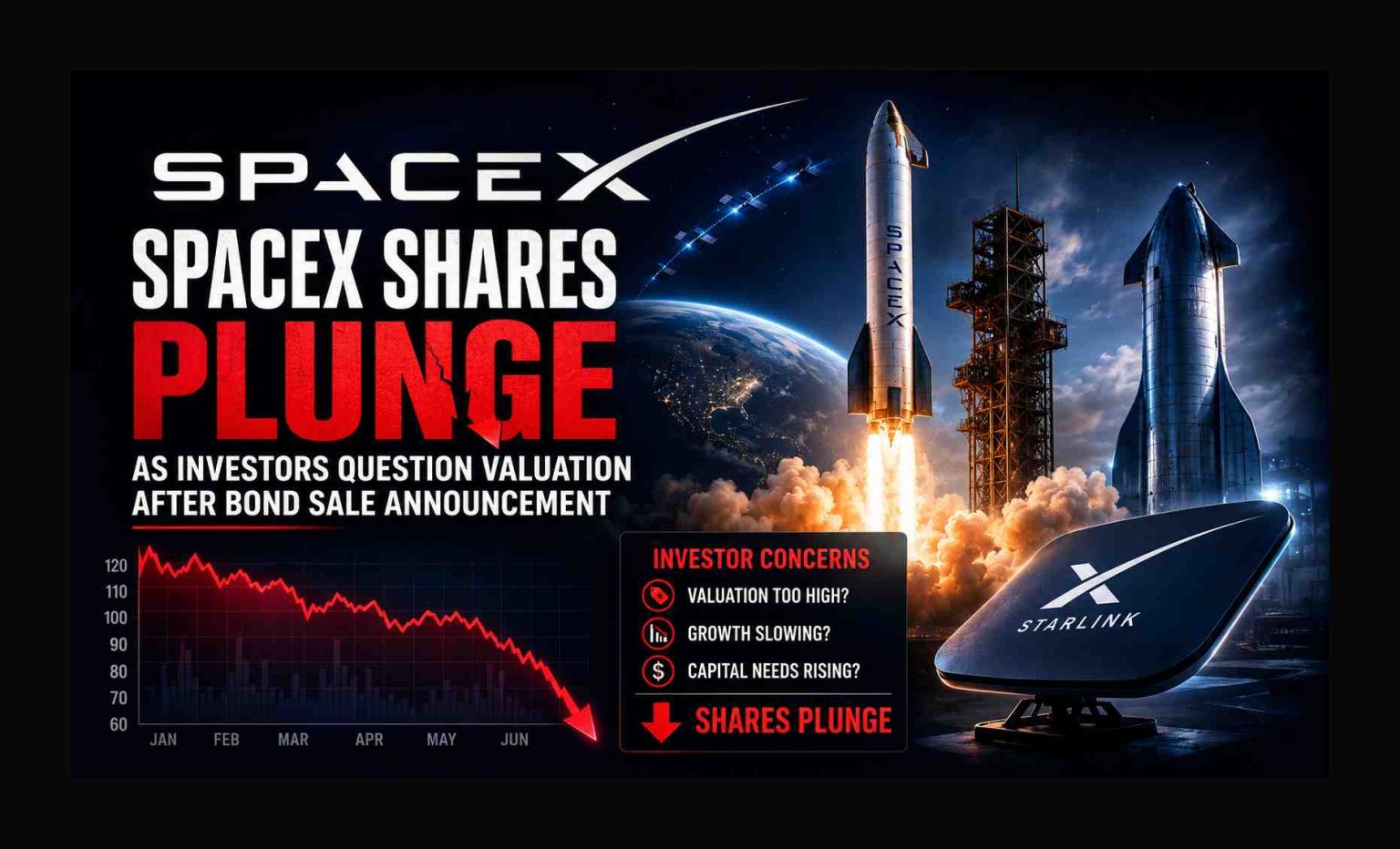
Shares in SpaceX (NASDAQ:SPCX) suffered their sharpest decline since listing. They fell around 16% and extended a three-day slide that has wiped roughly $400 billion from the company’s market value. The sell-off came just 10 days after its record-breaking IPO. It was triggered by concerns over valuation, rising debt levels and the scale of future spending commitments. While the stock remains above its $135 IPO price, enthusiasm that briefly pushed SpaceX’s valuation close to $3 trillion has started to cool. This is because investors reassess the company’s fundamentals. SpaceX: Does a $2.1 trillion valuation make sense? Why did the shares…
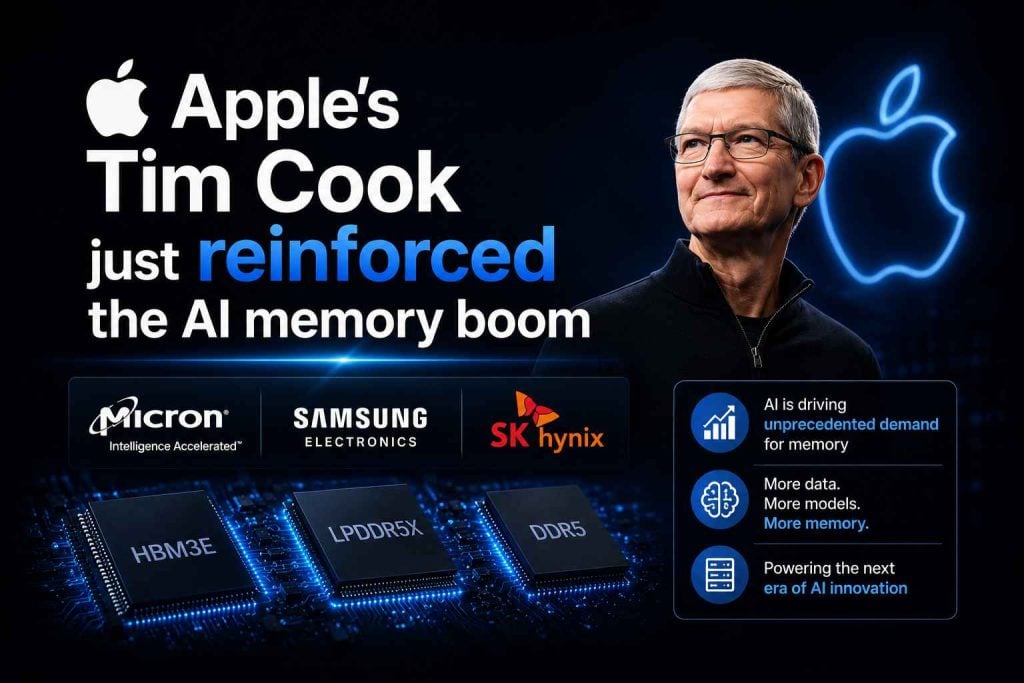
Memory stocks rallied after Tim Cook acknowledged that Apple (NASDAQ:AAPL) will have to raise product prices because soaring memory chip costs have become ‘unavoidable’. Investors interpreted the comments as confirmation that the current AI-driven memory shortage is proving more persistent than many had expected. The key point was not simply that Apple faces higher costs. It was that one of the world’s largest semiconductor buyers effectively confirmed that demand for DRAM and NAND remains far stronger than supply, a point Sharesify investigated recently (click link below). How crazy could the memory chip shortage become – and what does it mean…