



Author: Steven Frazer

Steven Frazer
Steven Frazer has worked in the investment space for nearly 30 years and was Shares magazine's (owned by AJ Bell) technology word basher and analyst for close on 15 years, covering all the major tech developments right back to the dot com boom and bust (AI, cloud computing, cybersecurity, robotics, digital commerce and more). He is a Spurs obsessive, ska junkie and loves a good book about physics. Winner of the 2013 UKTech journalist of the year gong and a TytoPR #Tech500 influencer in 2018 & 2019. Find him at LinkedIn: Click Here
Salesforce (NYSE:CRM) has become one of the biggest casualties of the 2026 rotation away from slower-growing enterprise software. The company increasingly looks like a contrarian value opportunity within large-cap technology. Despite continuing to generate strong profits and free cash flow, investors have increasingly questioned whether the company can deliver enough AI-driven growth to justify its previous premium valuation. The sell-off has been severe. The shares have fallen by around 40% this year and recently touched fresh 52-week lows around $160 before falling further, despite quarterly earnings beating expectations. Salesforce investor relations Salesforce (NYSE:CRM)Price: $155.02 (-40% 1-year)Market cap: $126.96bn Why has…
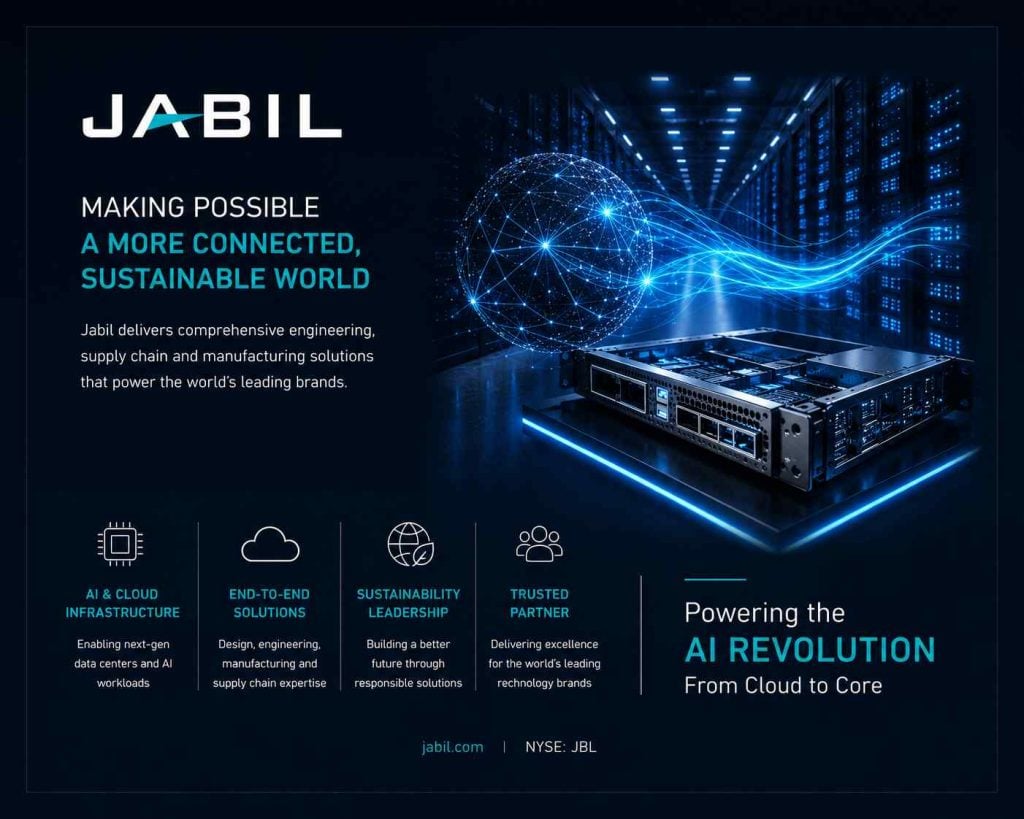
Contract electronics manufacturer Jabil (NYSE:JBL) delivered another impressive quarter on 17 June, comfortably beating Wall Street expectations and, more importantly, raising full-year guidance again. Jabil offers a differentiated way to gain exposure to the AI build-out without relying solely on chip designers. The results reinforce one of the strongest themes in global technology investing: the enormous build-out of AI infrastructure extends well beyond chip designers like Nvidia (NASDAQ:NVDA) and into the companies that physically manufacture servers, networking equipment, power systems and cooling infrastructure. While the share price initially responded strongly, jumping by as much as 14% in early trading, much…
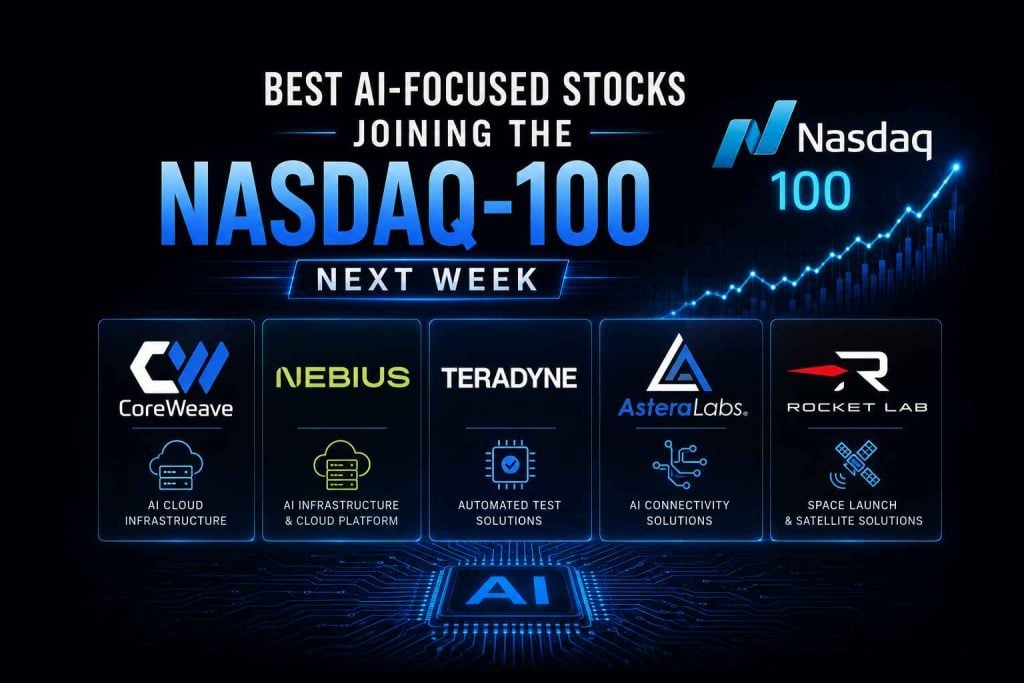
The June 2026 Nasdaq-100 rebalance marks another milestone in the AI investment boom. Five companies—CoreWeave (NASDAQ:CRWV), Nebius (NASDAQ:NBIS), Astera Labs (NASDAQ:ALAB), Rocket Lab (NASDAQ:RKLB) and Teradyne (NASDAQ:TER)—will join the index on 22 June, replacing older technology names Charter Communications (NASDAQ:CHTR), Cognizant Technology (NASDAQ:CTSH), Insmed (NASDAQ:INSM), Verisk Analytics (NASDAQ:VRSK) and Zscaler (NASDAQ:ZS). The new wave of AI names should generate additional buying from index funds tracking the Nasdaq-100 while increasing institutional ownership and liquidity. Unlike the current AI giants, such as Nvidia (NASDAQ:NVDA) and Microsoft (NASDAQ:MSFT), these businesses represent different parts of the AI ecosystem—from cloud infrastructure and semiconductor connectivity to…
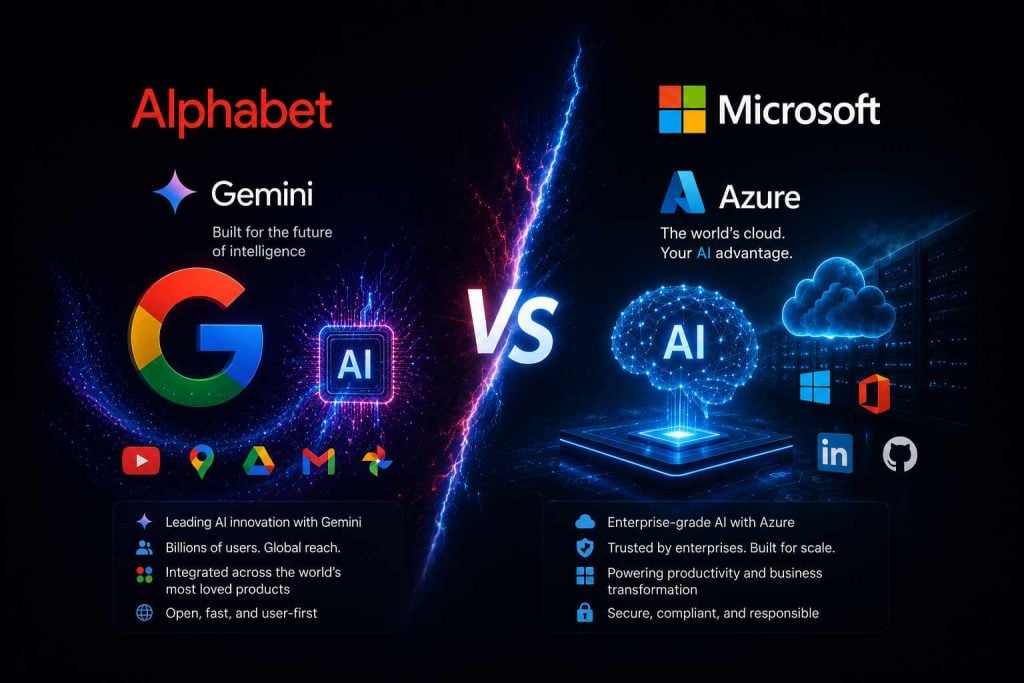
For UK retail investors sitting on sizeable gains, the obvious question is whether to bank Alphabet (NASDAQ:GOOG) profits and switch into Microsoft (NASDAQ:MSFT), which has underperformed despite remaining one of the world’s strongest AI franchises. There is no simple answer. Alphabet arguably has the stronger earnings momentum today, while Microsoft may offer the better risk/reward profile if its AI investments begin translating into faster revenue growth during the second half of 2026. Microsoft Q3 2026 slides Alphabet Q1 2026 slides Alphabet (NASDAQ:GOOG)Price: $371.10 Market cap: $4.53tnMicrosoft (NASDAQ:MSFT)Price: $393.83 Market cap: $2.93tn Share price performance MetricAlphabetMicrosoft2026 YTD share performance+18%-17%Market sentimentStrongCautiousMain concernCan…
The past five years have been unusually rewarding for UK equity investors who backed investment trusts capable of combining capital growth with a rising dividend. While UK equity income as an asset class was largely ignored between 2016 and 2022, the subsequent recovery in banks, defence, industrials and domestic cyclicals has created exceptional returns for several actively managed trusts. UK investors have also more recently been considering their exposure to US equity markets. A three-year surge of popular indices like the S&P 500, Nasdaq 100 and Nasdaq Composite has raised valuation concerns. The UK’s relative discount to US markets has…
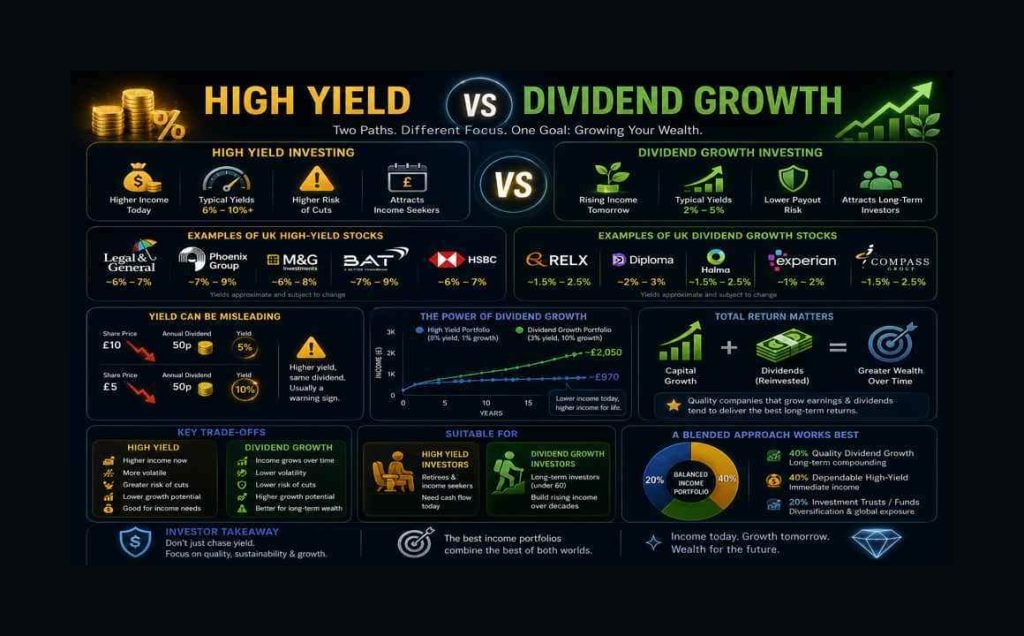
For income investors, one of the biggest decisions is whether to pursue the highest dividend yields available today or focus on companies that consistently grow their dividends year after year. Both approaches can generate attractive long-term returns, but they suit different objectives and risk tolerances. The key is understanding that a high dividend yield is not necessarily a sign of quality, while a lower yield combined with strong dividend growth can produce significantly greater total returns over time. The two approaches explained High Yield InvestingDividend Growth InvestingPrioritises maximum income todayPrioritises rising income tomorrowTypical yields 6%-10%+Typical yields 2%-5%Usually mature companiesOften high-quality…
The AI boom has created a very different semiconductor cycle from previous shortages. Instead of demand coming from smartphones and PCs, it is being driven by hyperscale AI data centres that require enormous quantities of high-bandwidth memory (HBM). Most industry analysts now believe this is becoming a structural shortage rather than a normal semiconductor cycle, with tight supply potentially lasting into 2027-28. Why is memory suddenly the bottleneck? Training and running large AI models requires vast amounts of HBM, a premium form of DRAM stacked alongside AI GPUs. Key factors include: Potential shortage scenarios ScenarioProbabilityMarket impactTight but manageableMediumHigher chip prices,…
SpaceX’s (NASDAQ:SPCX) spectacular stock market debut exceeded even bullish expectations. After pricing its IPO at $135, the shares surged almost 19% to close at $160.95, giving the company a market capitalisation of approximately $2.1 trillion—instantly making it one of the world’s largest listed companies. For UK retail investors, the key question is whether this valuation reflects genuine long-term opportunity or excessive first-day enthusiasm. SpaceX investor relations SpaceX IPO frenzy: should UK investors join the rush? SpaceX (NASDAQ:SPCX)Price: $160.95 (+19%)Market cap: $2.1tn First-day highlights MetricValueIPO price$135.00First-day close$160.95First-day gain+19.2%Market capitalisation$2.1 trillionCapital raised$75 billion Source: Nasdaq trading data and Reuters reporting. Valuation: priced…
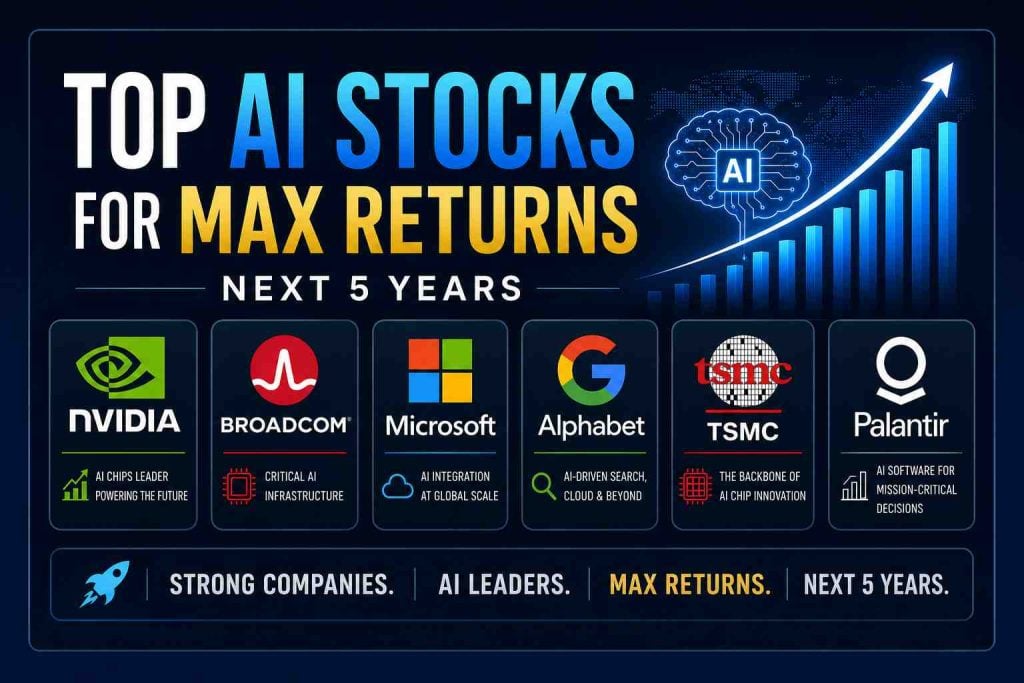
Artificial intelligence has already become the dominant investment theme of the decade, but the next five years are likely to look very different from the last three. Rather than simply rewarding companies associated with AI, investors are increasingly demanding evidence of sustainable earnings growth, competitive advantages and reasonable valuations. For retail investors seeking maximum long-term capital appreciation, the most attractive opportunities span four parts of the AI ecosystem: AI SegmentInvestment OpportunityRisk LevelAI chips & infrastructureHighest growthHighCloud platformsHigh growth with resilienceMediumEnterprise AI softwarePotentially explosiveHighSemiconductor manufacturingLower risk compoundersMedium 1. Nvidia (NASDAQ:NVDA) $204.87 Investment case Nvidia remains the purest way to invest in…
Leadership turnover and uncertainty around AI monetisation continue to weigh on Adobe (NASDAQ:ADBE) sentiment. The one-time tech star delivered another earnings beat, raised its full-year guidance and highlighted accelerating AI adoption. Yet investors focused on two issues: another senior executive departure and continuing doubts about whether Adobe can monetise generative AI quickly enough. The stock reacted badly, with Premark data implying declines of ~5% despite record financial results. Adobe Q2 2026 release Adobe Q2 2026 slides Adobe (NASDAQ:ADBE)Price: $208 (-5%)Market cap: ~$84bn For long-term retail investors, the results reinforced a familiar theme. Adobe continues to execute operationally, but the market…