




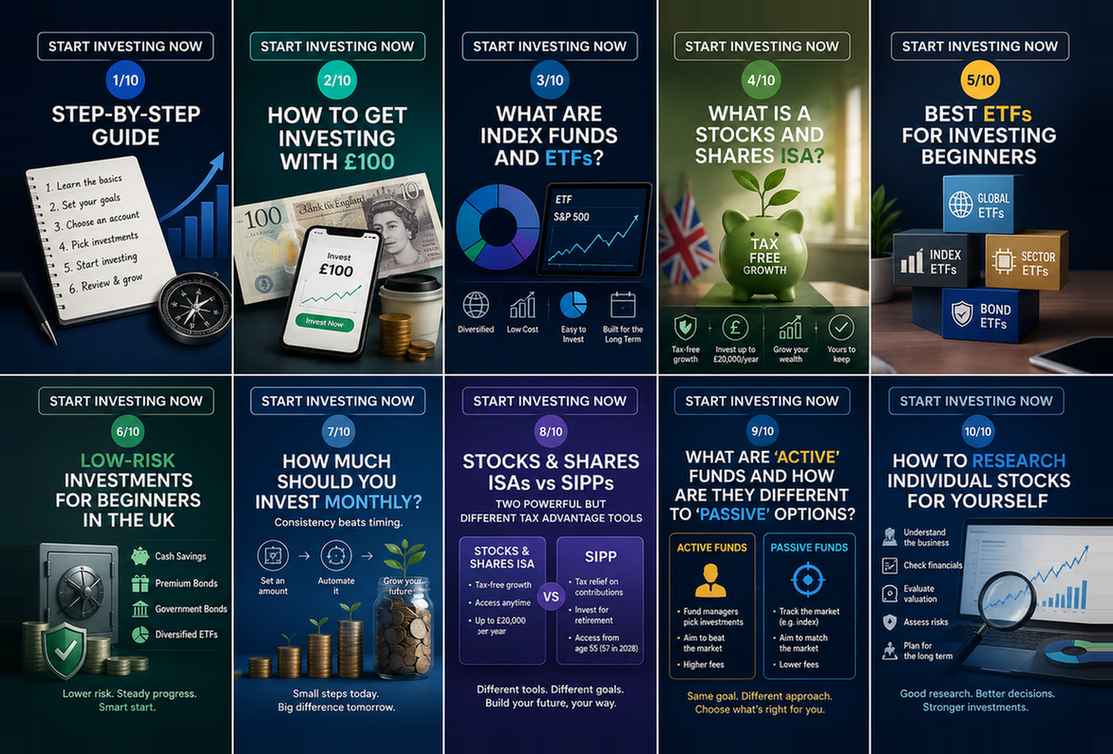
One of the most common questions new investors ask is:
‘How much should I invest each month?’
The good news is there is no perfect number—and that’s what makes investing so accessible… for anyone and everyone.
You don’t need to start big. Small monthly contributions can build over time into meaningful sums, but you DO need to start, and continue month after month, year after year, consistently.
This guide will help you choose the right monthly investing budget for your situation in 2026.
🧭 The simple truth about monthly investing
There is no ‘correct’ amount. Instead, your monthly investment depends on:
- Your monthly income
- Your monthly costs
- Your financial goals
- Your comfort level
👉 The best amount is the one you can stick to long-term.
💡 The golden rule of investing
Before anything else, remember this:
Invest what you can consistently afford—not what you think you should invest.
Consistency and discipline beats size.
Investing £50 every month for years is far more powerful than investing £500 once and stopping.
🥇 Beginner monthly investing levels (UK 2026)
A common rule of thumb for beginners is to invest 10% to 20% of your take-home pay. However, many people prefer a fixed sum each month, so that’s what we will use.
Here are realistic starting points for most beginners (but remember, these are rough guidelines only):
🟢 Level 1: £25/month (Starter habit)
Perfect for:
- Absolute beginners
- Low income or students
- Building the habit
What it achieves:
→ Builds consistency
→ Removes fear of starting
→ Starts compounding early
👉 Even small amounts matter over time.
🟡 Level 2: £50/month (Most common beginner level)
Perfect for:
- Working adults
- First-time investors
- Balanced budgets
What it achieves:
→ Meaningful long-term growth
→ Strong investing habit
→ Easy to maintain
👉 This is widely recognised as an ideal starting point for most beginners.
🟠 Level 3: £100/month (Strong wealth builder)
Perfect for:
- Stable income earners
- People serious about long-term investing
What it achieves:
→ Significant compounding over 10–20 years
→ Faster portfolio growth
→ Strong financial discipline
👉 This level builds real long-term wealth.
🔴 Level 4: £200+ per month (Accelerated growth)
Perfect for:
- Higher earners
- People with clear long-term goals
What it achieves:
→ Rapid portfolio scaling
→ Strong passive wealth building
→ Earlier financial independence potential
📊 Example: what monthly investing can become
Even small monthly investments grow significantly over time.
For example:
£50/month → steady long-term growth
£100/month → strong wealth accumulation
£200/month → powerful compounding over decades
👉 The key driver is time, not amount.
🧠 The most important concept: consistency and discipline
Investing only works if you stay consistent and disciplined. That means:
→ Investing every month
→ Not skipping during market drops
→ Not reacting emotionally
Markets go up and down—but your habit should stay the same.
📈 Where to invest your monthly money
Most beginners should keep it simple:
An index fund inside a tax-efficient account.
A sensible structure:
Account: Stocks and Shares ISA
Investment: Global index ETF
Strategy: Monthly automatic investing (direct debit)
Using as beginner-friendly, trusted app:
👉 Set it up once, then automate it.
⚖️ How to choose YOUR monthly investment sum
Ask yourself:
- What can I invest without stress?
If it feels painful, it’s too high. - Can I do this every month for 5–10 years?
If not, reduce it. - Am I still saving money for emergencies?
Investing should not replace savings.
🚫 Common mistakes beginners make
❌ Investing too much too early
→ Leads to budget overreach and stopping.
❌ Changing the amount every month
→ Consistency matters more than size.
❌ Waiting for ‘more money’
→ Time in the market matters more.
❌ Not automating investments
→ Manual investing often leads to inconsistency.
🧩 Simple beginner plan
If you’re unsure, use this:
Starter setup:
✔️ £50/month
✔️ Global index ETF
✔️ Stocks and Shares ISA
Upgrade path:
✔️ Increase by £10–£50/month as income grows
🧠 Key takeaway
There is no perfect monthly investing amount. But there is a perfect rule:
Start small enough to stay consistent and increase over time.
Even £25/month is powerful if you stick with it.
🚀 What to do next
Once you’ve chosen your monthly amount:
→ Open a Stocks and Shares ISA
→ Choose a global index ETF
→ Set up monthly auto-investing
→ Stay consistent for years
👉 The most important point for investing beginners to take is: whatever size sum you decide to start your investing journey with, start it now!
Want to learn more? Read the next part of Sharesify’s 10-part ‘Start investing now’ simple guide… ‘ – Stocks & Shares ISAs vs SIPPs’…
You might also like: